
From the Art+Logic archive · written in 2019. The tools may have moved on; the thinking still holds.
What We Make, Makes Us
In our age of rapidly evolving technology and unyielding human restlessness and discord, design ought to be more than simply functional; it should be expressive, socially meaningful, and humanistic. Design should transcend the purely technological, encompass the human, and strive for the sublime.
Sublime design presents itself, first and last, as a useful thing, but nestled within that window of interaction lies the novel articulation of a thought, an idea, a reflection, an invisible truth that speaks to us, intimate yet universal, purposeful without necessity of purpose, that leaves us playful, understood, elevated. It is a transformation so subtle that it escapes our conscious grasp but that once experienced, like music, we would never want to be without again.
, Manifesto
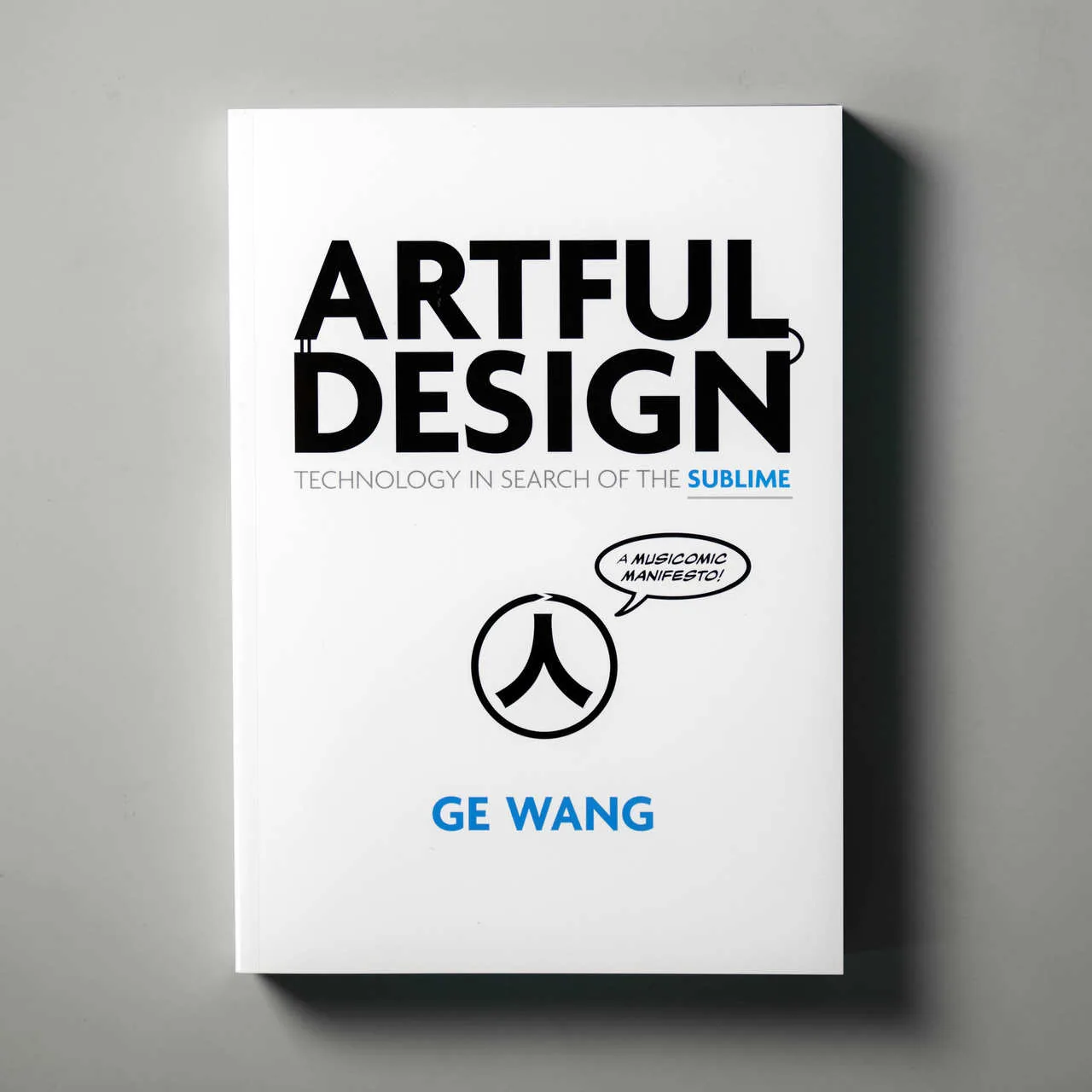
Ge Wang is a professor and computer music researcher, perhaps most widely known in the field as the creator of the ChucK language for creating computer music systems and one of the founders of the company Smule, creators of numerous iPhone music creation apps including the Ocarina and “I Am T-Pain”. In this new book from Stanford University Press, he lays out a set of strong arguments about design (mostly focusing on his work in computer music, but also thoughtful ruminations on pencil cases and other artifacts) focusing on how we as designers can aspire to the sublime in the systems that we build.
That he does so via the medium of a photo-realistic comic book might put some readers off or cause them to take the book not seriously, which would be a mistake, the book’s format and tone are perfectly in line with Dr. Wang’s overall ethos, everything in his work as presented in this book (and elsewhere; see this video of a talk he gave at TEDxStanford that’s filled with playfulness and gentle humor throughout. I don’t know many other software creators who jokingly brag that their software ‘crashes equally well’ in all the environments it runs in).
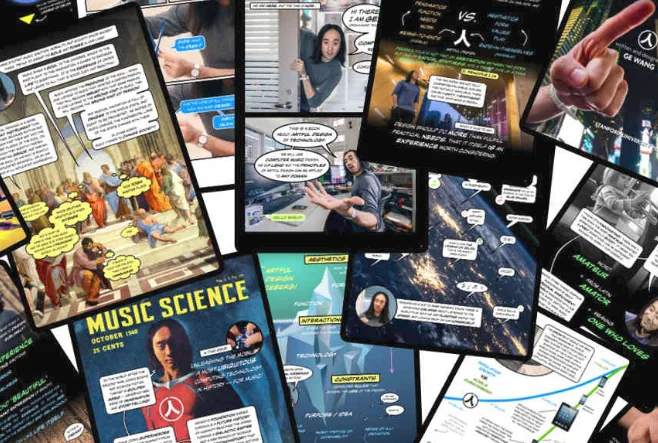
The book is constructed around a set of enumerated principles of design that are illustrated with examples, frequently but not always from his own work at Princeton, Stanford, and Smule. On my first reading of the book, some of those examples seemed to veer too much into the self-indulgent; on my second pass through the book now, it’s clear that (e.g.) what appeared to be a goofy digression in the book based around a visit to his dissertation advisor’s house was actually an elaboration of the principles being discussed in the book.
One can also imagine a skeptical reader disregarding the book under the theory that while it might make sense to apply these principles for toy music apps or games, there’s no place for this kind of frippery in the world of Real Software that gets used in Real Businesses. I would hope that at some point those skeptical readers would consider that most business software is mediocre at best, and more frequently has an attitude of disdain or outright hostility to its users, and that there’s no reason for this to be the case.
Even systems that might not aspire to the sublime can benefit from a more considered stance of being human-focused. Even the most callous user of business software can note the hyper-accelerated adoption of Slack, which manifests the kinds of detail and personality that Wang writes about here.
The main recurring theme in the book is one of reclaiming technology to augment human lives instead of the reverse, I’m hoping that we can all learn the lessons outlined in this book.
(…and after you’re done with this book, you might want to do what I did and read Dr Wang’s PhD Thesis from Princeton on the ChucK language.)
(all images from the book’s website Artful.design)