
Art+Logic begins
Tom Bajoras, Paul Hershenson, and Justin Souter start building custom software for pro audio and musical instrument companies. Fully remote from day one.
// I need to
ModernizeUpgrade without breaking it RescueFix what someone else started Build NewTurn an idea into a product Reach More PeopleGet found, get used, include everyone// Company
Case StudiesExpertiseAbout + CareersResourcesContact Book a call →We're an independent team of senior engineers and designers who solve the software problems that make other teams nervous. Remote across the Americas since day one, and still building software that lasts.















For more than three decades, clients have come to us after hearing the same thing elsewhere: it can't be done. Those are exactly the problems we're drawn to. We call it coding the "impossible"®.
After all that time, we've learned that successful projects begin with understanding the business problem, not the technology. So we listen first. We ask questions, challenge assumptions, and work out not just what needs to be built, but why it matters.
We're also comfortable saying no when we're not the right fit. We'd rather help someone make the right decision than win the wrong project. See what we're good at.
Have one of those problems? Tell us about it →
Desktop gave way to the web, the web to mobile, mobile to cloud, and now AI is changing software all over again. We've worked through every one of those shifts.
Tom Bajoras, Paul Hershenson, and Justin Souter start building custom software for pro audio and musical instrument companies. Fully remote from day one.
Mac audio drivers for ECHO's interfaces start a partnership that's still going. Read the story.
Early in app store history, our tkts apps for Theatre Development Fund hit 12,000 downloads in four days.
We launch a Software Incubator Lab at Summer NAMM and acquire Accomplio, a San Francisco product development firm.
MIDI 2.0 is adopted at Winter NAMM, after our engineers helped validate it with prototype implementations.
AI-assisted modernization and rescue, with senior engineers reviewing every line. How we use AI.
We're an independent company, and we like it that way. It lets us focus on what's right for our clients instead of what's right for the next quarter.
We've loved every twist and turn in technology. We keep learning and experimenting, but we never chase new tech just because it's new.
Good software should still be delivering value years after it launches. Many of our client relationships have lasted for decades.
Start with a free conversation about what you're working on.
No account managers between you and the work. Senior engineers, designers, testers, and project managers, working from home offices from Canada to South America.
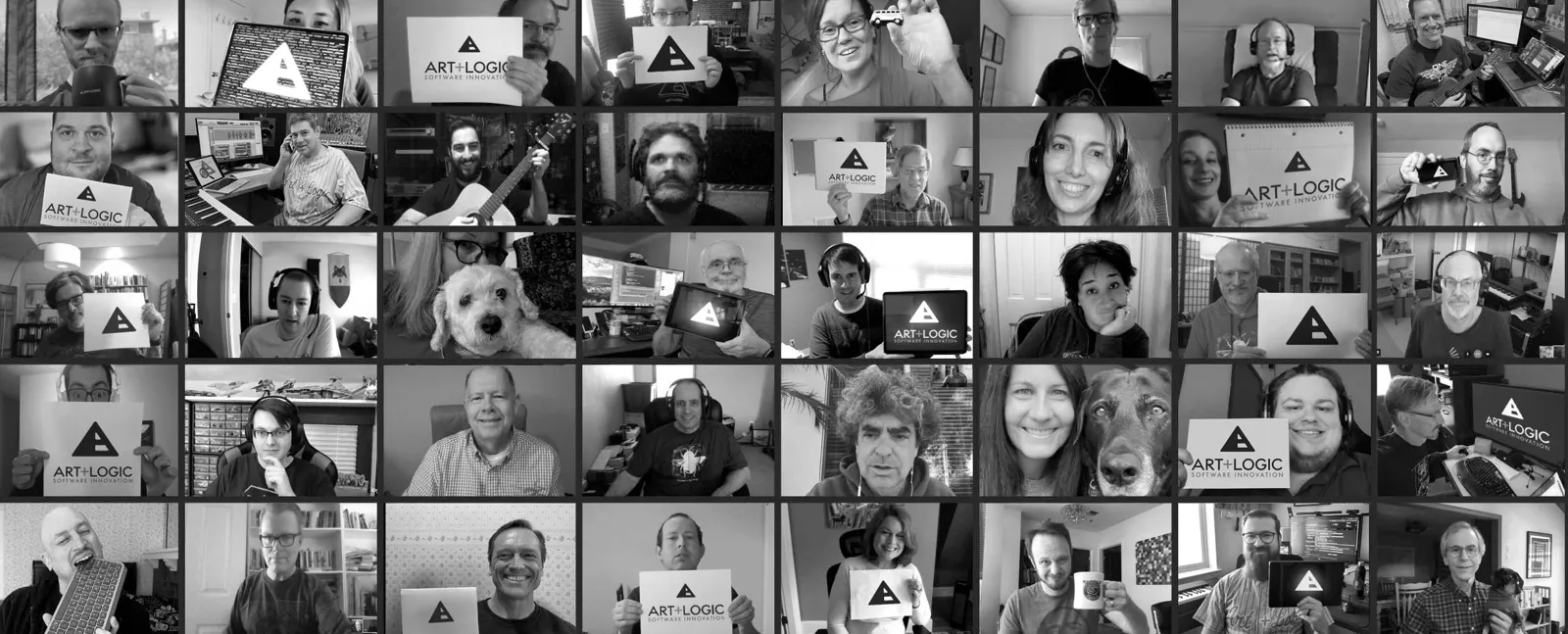
The difference between an average developer and an outstanding one can be dramatic. If you're motivated by hard problems across a wide range of industries, you may be a great fit here.
We've never had a central office, by choice: programming takes long stretches of focus, and trust and autonomy make that easier. Our people work from home offices from Canada to South America.
You control your environment and schedule within the needs of the project, with meaningful overlap with US business hours for collaboration and client meetings.
Projects usually have one to three developers, plus design, QA, and project management. You contribute to architecture, not just tickets.
Our clients range from startups and inventors to Fortune 500 companies. We value engineers who are energized by variety and comfortable in unfamiliar codebases.
Complete and submit part 1 of the Art+Logic Programming Challenge. Usually a week or less.
Passing submissions get part 2 of the challenge. Usually one to two weeks.
Especially strong submissions complete a questionnaire and skills list and join our pool of developers to interview when the team grows.
An interview with senior members of our management team, and sometimes the project team too.
Assignment to your first project and onboarding at Art+Logic.
Friendly, lasting relationships make the best environment for success, for us and for our clients.
Elegant, appropriate solutions make better products in the long run, and they are a source of creative pride.
Intelligence, creativity, integrity, and a passion for the work.
Remote work and flexible hours mean more quality time with family, friends, and interests.
We trust our people to act in the interests of clients and the company, and that trust comes back as loyalty and dedication.
We're always looking for brilliant minds, though. Our turnover is far lower than the industry average, so when a spot opens, it goes to someone we already know.
This form goes to our team, not a sales line. Tell us what's on your mind and a real person will get back to you.
Don't see yours? Ask a real person. We answer within one business day.
In 1991, by Tom Bajoras, Paul Hershenson, and Justin Souter. We started by building custom software for pro audio and musical instrument companies, and we still do that today, alongside much more.
We're remote across the Americas, with people from Canada to Mexico to South America. We've had no central office since 1991, our teams overlap US business hours, and our mailing address is in Pasadena, California.
Yes. We're still independent, and we like it that way. It lets us make decisions based on what's right for our clients.
Never. Every project is built by our own vetted designers, developers, and testers, all working in North and South America.
Not right now, but we're always looking for brilliant minds. Our hiring starts with a two-part programming challenge, followed by an interview with senior members of our team.
We work with independent contractors on an hourly basis. Typical projects run from six weeks to six months, many continue far longer, and our goal is long-term relationships with strong developers.
Tell us what you're working on, and we'll see if we can help. You'll talk to someone who knows software, not a sales script.
Your first call is with Aja, our VP of Sales. He'll help make sure you're solving the right problem. Here's what you'll cover together:
The business goal first, then the technology.
And the tradeoffs of each, in plain language.
Technical and business, before they cost you.
What's practical, and what's just hype for your project.
Even if the right next step is not us.
Some problems are easier to explain in writing. Send us a few lines about what you're working on, and we'll reply within one business day. Helpful to include: