
From the Art+Logic archive · written in 2017. The tools may have moved on; the thinking still holds.
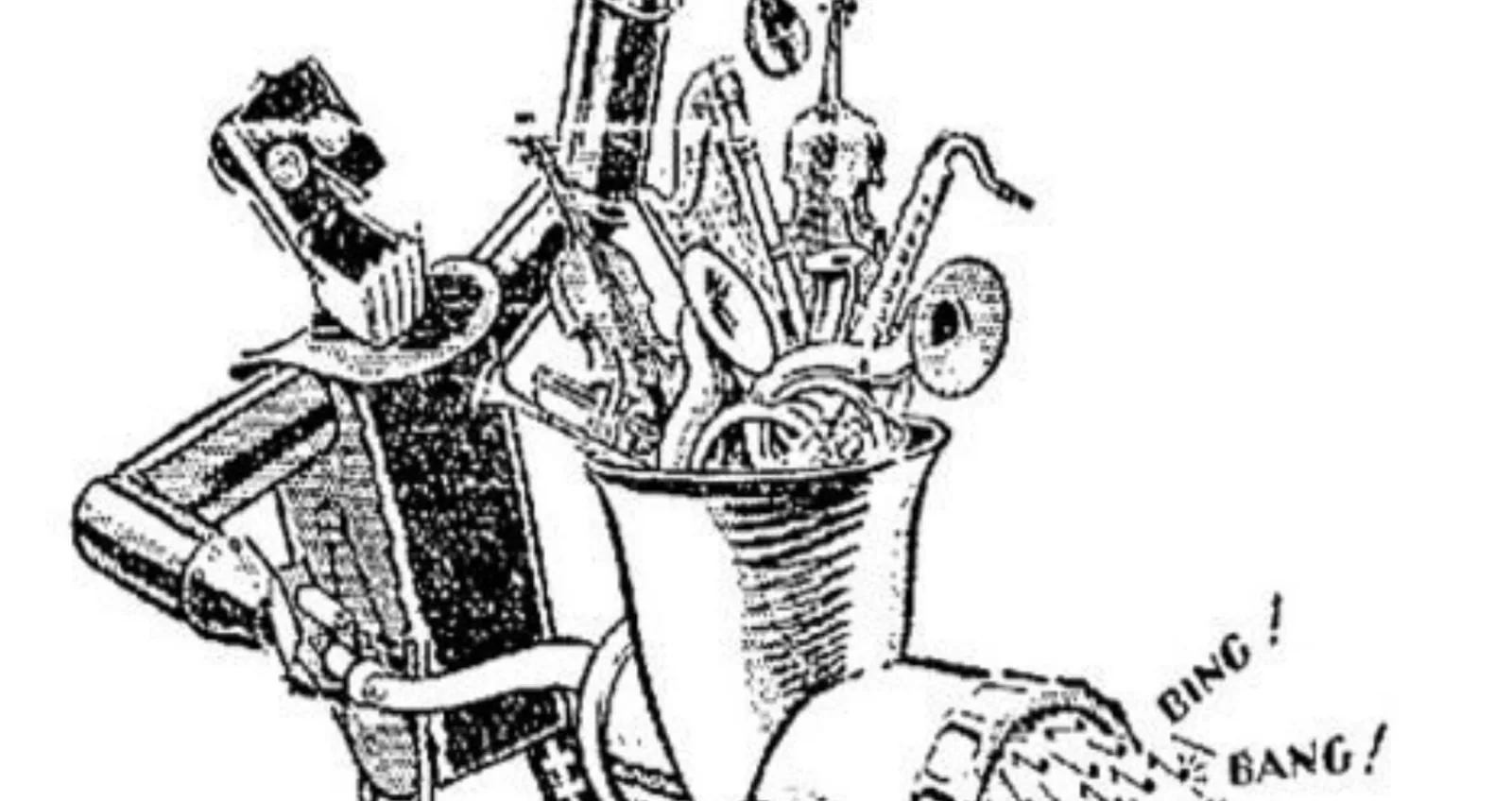
Prior to the release of The Jazz Singer in 1927, live musicians accompanied motion pictures in movie theaters. After the integration of synchronized sound, live musicians were no longer necessary. Protesting this technological advancement that took away their jobs, the Music Defense League spent $500,000 (quite a sum of money in the 1930s!) on an ad campaign featuring a maniacal robot.
Fast forward to the present and music is now being performed by actual maniacal robots. This is “Z-Machines”.
Z-Machines is a robot ensemble created by a team of Japanese roboticists in 2013. The music they perform in the following video was composed by UK recording artist Squarepusher.
When I was a graduate student at the Center for Music Experiment at UCSD, I heard a whole lot of less-human-sounding music performed by actual humans.
Meet Gavin:
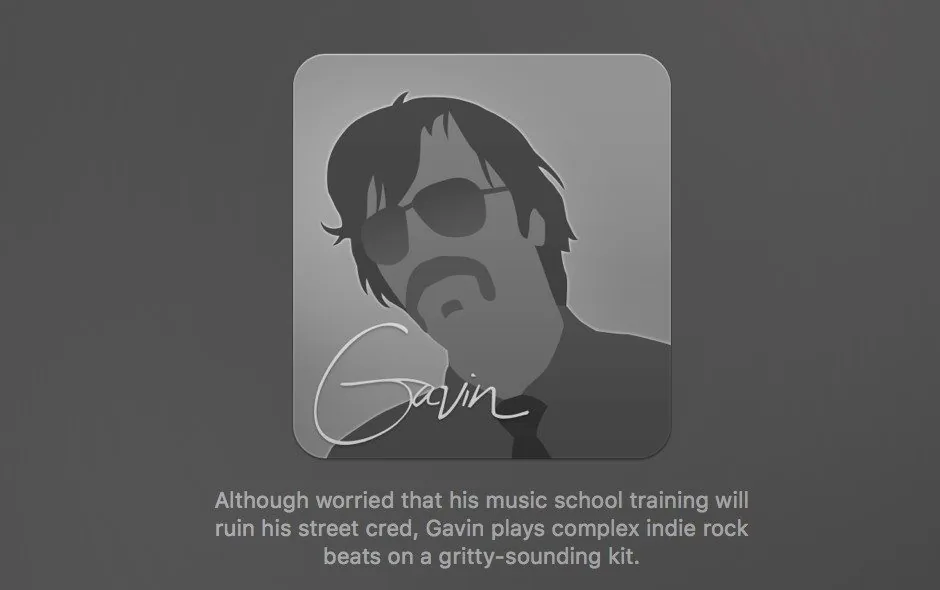
Gavin is one of the drummers available in Logic Pro X, Apple’s prominent Digital Audio Workstation software. In Logic, you can create a Drummer track and then select a drummer personality from the library to “play” drums for you. Gavin sounds just neurotic enough to work at Art+Logic for his day job.
Gavin is not an artificial intelligence. (Nor are the robots in Z-Machine.) Gavin is an algorithm that generates a drum track based on a series of parameters entered by the user in Logic Pro X. He does not make real-time decisions about what to play. He does not listen and respond to other musicians (real or artificial). He exercises no creativity or judgement. He cannot communicate. He is not intelligent in any sense. He is, however, suggestive of things to come.
At Google, the Magenta research team led by Douglas Eck is asking “Can machines make music and art? If so, how? If not, why not?” Eck describes their research as follows:
The goal of Magenta is to produce open-source tools and models that help creative people be even more creative. I’m primarily looking at how to use so-called “generative” machine learning models to create engaging media. Additionally, I’m working on how to bring other aspects of the creative process into play. For example, art and music is not just about generating new pieces. It’s also about drawing one’s attention, being surprising, telling an interesting story, knowing what’s interesting in a scene, and so on.
Between the Magenta project and how far voice-controlled intelligent assistants like Alexa and Siri have come in recent years, it’s not hard to imagine a future Gavin passing the Turing test:
“Hey Gavin - that was pretty cool. I liked your fill leading up to the first chorus. I thought the fill on the second chorus was too hot. Try to cool it this time around, OK? Also, lay back just a bit at the bridge. That’s Clarence’s time to shine on the sax.”
There will be broad applications of AI in music if researchers like Eck are successful, as I expect they will be in time:
- Imagine a service like Pandora, but one that composes music on demand for you: “Aoide - please play some quiet dinner music that sounds like Jim Hall and Bill Evans, but toss in a flute. I love the flute….” “Aoide - I’d really like to have a special song for my daughter’s bat mitzvah. She likes Taylor Swift and really hates Lady Gaga…”
- Or something pedestrian: intelligent karaoke software that can follow the singer and adapt to their performance in real-time.
- Or musician bots you can jam with that emulate the style of your favorite musicians. I’d have a blast jamming with a McCoy Tyner bot at the same time as a Keith Richards bot!
There is a lot of understandable angst over the impact automation and artificial intelligence will have on human lives. How will displaced workers find new jobs? Will the gulf between rich and poor become even wider? Will artforms be compromised or altered beyond recognition? I don’t have answers, but I do know that technological progress is inexorable. If human ingenuity can create an artificial musical intelligence that can pass the Turing test, it will.
Harkening back to the Music Defense League, here are their words that accompanied the image of the maniacal robot in the September 2, 1930 edition of the Syracuse Herald:
Tho’ the Robot can make no music of himself, he can and does arrest the efforts of those who can.
Manners mean nothing to this monstrous offspring of modern industrialism, as IT crowds Living Music out of the theatre spotlight.
Though “music has charms to soothe the savage beast, to soften rocks or bend a knotted oak,” it has no power to appease the Robot of Canned Music. Only the theatre-going public can do that.
Hence the swift growth of the Music Defense League, formed to demand Living Music in the theatre.
Every lover of music should join in this rescue of Art from debasement. Sign and mail the coupon.
87 years later, it seems to me, and I expect to virtually everybody, that the maniacal robot of recorded music did not ultimately debase the artform, but instead helped propel it to new heights of artistic expression (with no disrespect meant to the musicians who were affected by this innovation when it happened).