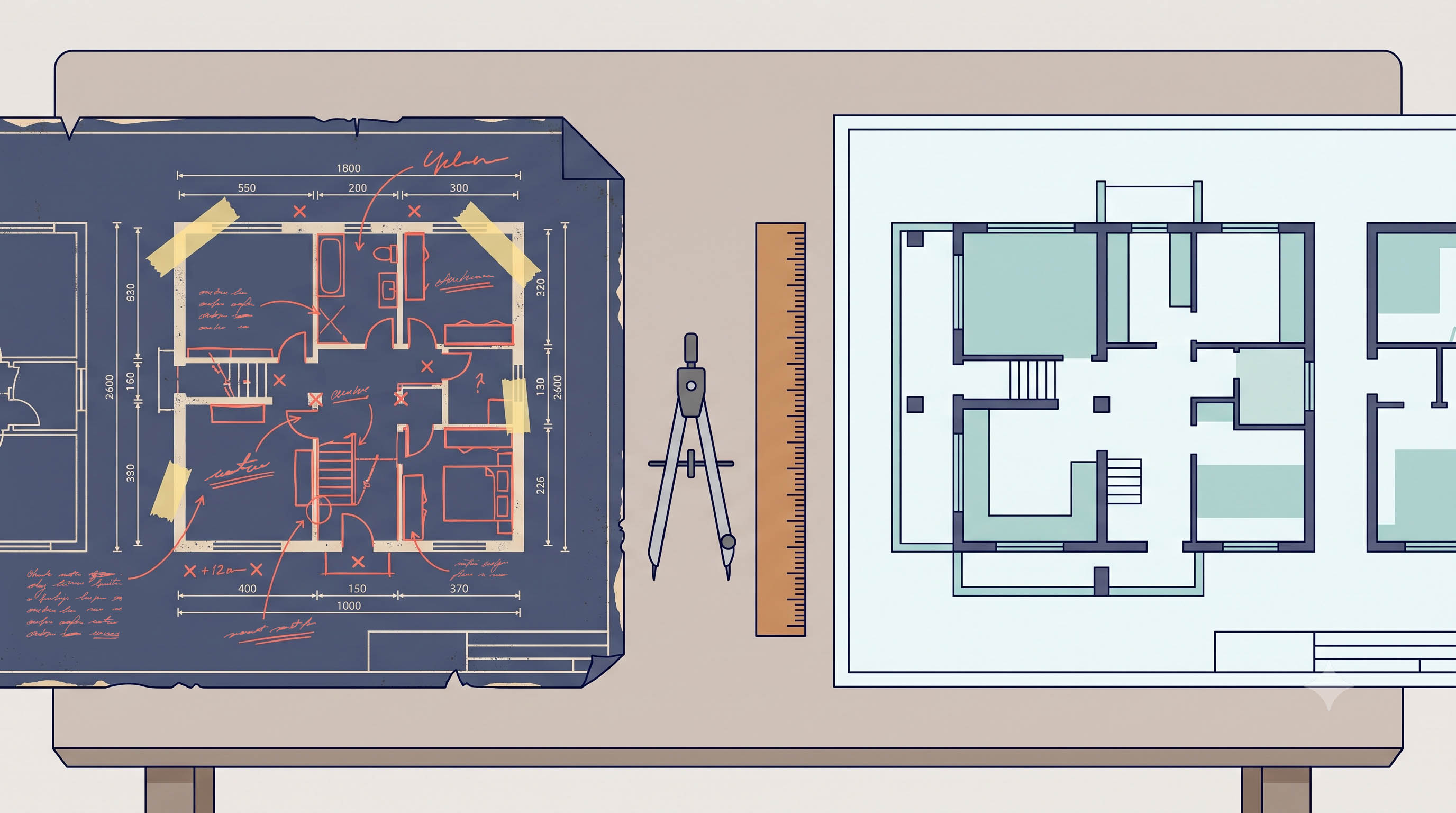
Rebuild or Modernize? A Guide to Making the Right Software Investment
Published Thu, Jul 16, 2026
Every aging software system eventually reaches a financial decision point.
The business depends on it. Teams complain about it. Customers may never see it directly, but they feel its limits in slower service, delayed releases, clunky workflows, inconsistent data, or rising support costs. Engineering says the architecture is holding the company back. Operations says the system is too important to disrupt. Finance sees the maintenance spend growing, but also knows that “let’s rebuild it from scratch” can become an expensive, open-ended bet.
For CFOs, the core dilemma comes down to this:
Should we rebuild this software, or modernize what we already have?
The answer is rarely obvious. A full rebuild can sound clean and decisive, but it also carries serious cost, timeline concerns, and adoption risk. Modernization can preserve valuable business logic and reduce disruption, but it may not go far enough if the foundation no longer supports where the business needs to go.
This isn’t just a technology decision; it’s a capital allocation decision.
AI is also changing the economics of this decision. The early work of modernization, understanding legacy code, surfacing undocumented business logic, identifying dependencies, and mapping a phased path forward, has historically required a lot of manual analysis. Modern AI tools can accelerate parts of that work, giving teams a faster and clearer view of what they are dealing with. That does not replace experienced engineers, especially when business context, architecture, security, and tradeoffs matter. But it can change the financial equation. For CFOs evaluating whether to rebuild or modernize, AI may reduce discovery time, improve visibility into hidden complexity, and make phased modernization a more practical option than it would have been a few years ago.
For CFOs, the goal is to understand which path creates the best risk-adjusted return: lower operating costs, faster delivery, stronger security, better reporting, improved customer experience, and more flexibility for future growth.
Rebuild vs. Modernize: What’s the Difference?
A software rebuild means replacing an existing application with a new system, usually built from the ground up. The team may reuse requirements, workflows, data models, or integrations, but the core application is recreated on a new technical foundation.
A software modernization effort improves the existing system without replacing everything at once. That can include refactoring code, updating infrastructure, improving security, moving selected workloads to the cloud, replacing outdated components, exposing APIs, improving observability, redesigning workflows, or gradually separating a monolithic system into more flexible services.
Put simply:
Rebuilding replaces the system. Modernizing evolves the system.
But in practice, the line is not always clean. Many successful software investments are hybrids. A company may modernize the parts of a system that still work while rebuilding the pieces that create the most cost, risk, or strategic constraint.
For CFOs, the better question is not “Which option is more modern?”
It is:
Which investment path produces measurable business value without creating unnecessary operational risk?
Why Legacy Systems Survive So Long
It is easy to assume legacy systems stick around because organizations are resistant to change.
More often, they survive because they are doing something important.
Legacy systems often support critical business operations, contain years of accumulated business logic, and encode workflows that may not be documented anywhere else. Teams rely on them every day. Customers may interact with them directly or depend on processes they enable behind the scenes. The longer a system has been running, the more deeply it tends to connect with the organization around it. (Art+Logic)
That is what makes the rebuild-versus-modernize decision difficult.
You are rarely replacing “just software.” You are changing a network of assumptions, workflows, reporting habits, integrations, exceptions, and institutional knowledge that has evolved.
That is also why a rebuild can fail even when the new technology is better.
If the project underestimates the business knowledge embedded in the existing system, teams may discover undocumented workflows, edge cases, reporting requirements, and integrations after development is already underway. As a result, costs increase, timelines stretch, and confidence erodes. (Art+Logic)
For CFOs, the lesson is simple: before funding a rebuild, make sure the organization understands what the current system actually does.
The Hidden Cost of “Keeping It Running”
Legacy software often looks cheaper than it is.
On paper, the system is already built. The original investment is behind you. The team knows how to operate it. Customers are using it. Replacing it looks expensive.
But maintaining an aging system can create a compounding drag on the business.
Art+Logic has described this as a velocity tax: when small changes take too long, QA cycles drag, deployments are slow, and teams spend more time working around the system than improving it. (Art+Logic)
For a CFO, that tax shows up in several ways.
Maintenance Cost
Older systems often require more effort for routine changes. Engineers spend time understanding fragile code, avoiding side effects, patching outdated dependencies, or working around architectural constraints.
That effort may be classified as a normal development expense, but financially it behaves more like debt service.
The business keeps paying interest on past decisions.
Opportunity Cost
When every product improvement takes too long, the company loses speed.
New pricing models, customer features, integrations, automation initiatives, compliance updates, and reporting improvements may all be delayed because the software cannot support change efficiently.
This is where legacy systems become a growth constraint.
The issue is not only what the system costs.
It is what the system prevents.
Talent Cost
Outdated systems can make it harder to hire and retain strong technical talent. Developers generally want modern tooling, healthy development practices, and systems where they can make meaningful progress. If the stack feels brittle or dated, the company may narrow its talent pool and increase retention risk. (Art+Logic)
Even when the current team is excellent, institutional knowledge can become concentrated in a few people.
That creates key-person risk.
Risk Cost
Aging software can carry security, compliance, availability, and data integrity risks. Outdated frameworks, fragile integrations, limited automated testing, and poor observability can increase the likelihood and impact of incidents.
The cost of a system failure is not just remediation.
It can include lost revenue, SLA penalties, customer churn, operational disruption, audit exposure, reputational damage, and executive distraction.
Technical Debt Is a Business Discipline
Technical debt is often discussed as an engineering issue: messy code, rushed patches, outdated frameworks, or brittle architecture.
But debt in software rarely lives only in the codebase.
It also accumulates in product decisions, design shortcuts, release processes, documentation gaps, and team culture. Product debt can create bloated features that do not serve real user needs. Design debt can create fragmented workflows and adoption friction. Process debt can turn small fixes into weeks of untangling. Cultural debt can normalize short-term wins at the expense of long-term stability. (Art+Logic)
That matters for CFOs because software debt behaves a lot like financial debt.
Some debt is intentional and useful. A company may take a shortcut to reach the market faster, validate demand, or satisfy an urgent customer need. That can be a rational tradeoff.
The problem is unmanaged debt.
If the business keeps deferring repayment, the cost compounds. Teams move slower. Customer experience suffers. Support costs rise. Reporting becomes less trustworthy. Investors and stakeholders lose confidence in the company’s ability to adapt.
The goal is not to eliminate all technical debt.
The goal is to know which debt you are carrying, what it is costing, and when it needs to be paid down.
That makes rebuilds and modernization efforts easier to evaluate. They are not abstract “technology upgrades.” They are debt management strategies.
When a Rebuild Makes Financial Sense
A full rebuild is not automatically wrong. In some situations, it is the responsible choice.
A rebuild may make sense when the existing system no longer matches the business model, customer expectations, operational needs, or strategic direction of the company.
1. The Current System Cannot Support the Future Business
If the company is entering new markets, changing pricing models, scaling transaction volume, adding digital services, preparing for M&A, or shifting from internal tooling to customer-facing software, the old architecture may not be fit for purpose.
A system designed for one stage of the business can become a liability in the next.
For example, software built for a small internal operations team may not support a high-volume self-service customer platform. A system built for one region may not support global compliance, localization, or multi-entity reporting. A product built around manual configuration may not support enterprise-scale automation.
When the gap between the system’s design and the company’s strategy is too large, modernization may only delay the inevitable.
2. Incremental Fixes Keep Failing
CFOs should be especially alert to recurring “temporary” fixes.
If the company has funded multiple rounds of patches, partial rewrites, upgrades, manual workarounds, and emergency stabilization efforts without improving the overall economics of the system, it may be time to stop financing the debt and invest in a new asset.
A rebuild can be justified when incremental spending no longer produces durable value.
3. The Existing Codebase Is Too Fragile to Change Safely
If small changes regularly break unrelated features, estimates are unreliable, test coverage is weak, documentation is limited, and only a few people understand critical behavior, the system may be too risky to keep extending.
That does not always mean the entire platform should be rebuilt.
But if the company cannot safely modify a system it depends on, the business has limited control over a critical asset.
That is a financial risk, not just a technical inconvenience.
4. The Technology Stack Is a Dead End
Some systems are built on languages, frameworks, libraries, or platforms that are difficult to support. Vendor support may be ending. Security patches may be unavailable. Hiring talent may be expensive. Integration options may be limited.
If the stack itself is constraining the business, modernization may require so much replacement that a rebuild becomes the clearer investment.
5. The User Experience Needs a Fundamental Redesign
Sometimes the problem is not only the backend. The workflow itself may be wrong.
If employees or customers rely on spreadsheets, duplicate data entry, manual approvals, offline processes, or support tickets because the software does not match how work actually happens, a rebuild may be necessary to redesign the experience around the business process.
A modern interface placed on top of a flawed workflow may not deliver the operational improvement the company needs.
When Modernization Is the Better Investment
Modernization is often the more financially disciplined path, especially when the existing system still contains valuable business logic and supports critical operations.
A modernization strategy can reduce risk by improving the system in phases instead of replacing it all at once.
1. The Core Business Logic Still Works
Many legacy systems look outdated but contain years of valuable domain knowledge.
Pricing rules, approval workflows, operational edge cases, compliance logic, reporting calculations, and customer-specific requirements may all be embedded in the software.
Throwing that away can be expensive and risky.
Modernization allows the company to preserve what works while improving the technical foundation around it. As Art+Logic has put it, the goal is not to preserve every technical decision; it is to preserve the value those decisions created. (Art+Logic)
2. The Business Cannot Tolerate Big-Bang Disruption
A full replacement can introduce operational risk, especially if the system supports revenue, fulfillment, logistics, billing, customer service, or compliance.
Modernization can be phased around business priorities. The team can improve performance, security, integrations, reporting, and user experience while the existing system continues to operate.
For finance leaders, this matters because phased modernization can make spend more predictable and outcomes easier to validate.
3. The Main Problems Are Isolated
Not every legacy system is broken everywhere.
The application may have a slow reporting module, an unreliable integration layer, an outdated interface, a manual deployment process, or a scaling bottleneck. If the pain is concentrated in specific areas, a targeted modernization effort may produce better ROI than a full rebuild.
This is where “start with the pain, not the platform” becomes an important principle. Moving to the cloud or rewriting in a new framework is not inherently valuable. Solving the friction that is slowing development, operations, reporting, or customer experience is. (Art+Logic)
4. The Company Needs Value Sooner
Rebuilds often require a long investment period before the business sees a meaningful return.
Modernization can produce near-term wins: faster workflows, improved reporting, reduced support burden, better performance, stronger security, easier deployments, or lower infrastructure costs.
That matters when budgets are tight, when the business needs evidence before approving a larger transformation, or when leadership wants to reduce risk through measurable checkpoints.
5. The Existing System Can Be Gradually Untangled
Some legacy systems can be improved through a phased approach: isolate high-friction modules, build modern replacements alongside the current system, shift workloads gradually, and retire old components as the replacement proves itself.
Art+Logic has described this as decoupling rather than demolishing. Many legacy systems can be modernized one piece at a time, especially when the team creates parallel paths that let the current system keep running while modern capabilities gradually take over. (Art+Logic)
This can combine the strategic benefits of replacement with the financial control of staged investment.
The CFO’s Evaluation Framework
The rebuild-versus-modernize decision should be made through business, financial, and technical analysis.
Here are the questions CFOs should ask before approving either path.
1. What Business Outcome Are We Buying?
Do not begin with the architecture; instead, begin with the business result.
Are you trying to reduce operating costs? Increase engineering velocity? Improve customer retention? Launch a new product line? Reduce cybersecurity risk? Improve reporting and forecasting? Support more transaction volume? Eliminate manual work? Improve compliance? Prepare for acquisition, investment, or audit?
A rebuild or modernization effort should be tied to specific outcomes. Without that clarity, the project can become a broad technical improvement program with unclear ROI.
A useful test is whether the investment can be explained in business language:
“We are modernizing this platform so we can reduce manual order processing.”
“We are replacing this architecture because it cannot support the transaction volume required for our growth plan.”
“We are improving deployment and testing so product teams can release safely and more often.”
The more specific the outcome, the easier it is to evaluate the right path.
2. What Is the True Cost of the Current System?
CFOs should look beyond hosting bills and engineering headcount.
The total cost of ownership may include maintenance labor, incident response, downtime, manual operations, customer support volume, delayed revenue initiatives, compliance gaps, security remediation, vendor fees, data reconciliation, reporting inefficiencies, onboarding time, and recruiting challenges.
A legacy platform may appear inexpensive because many costs are scattered across departments.
Pulling those costs together often changes the investment conversation.
3. What Risks Are We Carrying Today?
Modernization and rebuild projects carry delivery risk.
But doing nothing also carries risk.
CFOs should ask:
- What happens if a key developer leaves?
- What happens if transaction volume doubles?
- What happens if a vendor discontinues support?
- What happens if a major customer requests an integration we cannot support?
- What happens if we need to pass a stricter security review?
- What happens if the system goes down during a peak period?
- What happens if reporting remains unreliable?
The decision should compare the risk of change against the risk of inaction.
4. Can We Fund This in Stages?
Large software projects become more manageable when they are broken into funded phases with measurable checkpoints.
Rather than approving an open-ended rebuild, CFOs can ask for a staged plan:
- Assessment and discovery
- Architecture and roadmap
- Highest-risk component replacement
- First measurable business outcome
- Expansion based on validated results
This structure helps avoid the common trap of committing to a large technical vision before the business has evidence that the approach works.
It also creates opportunities to stop, adjust, or accelerate based on results.
5. What Should We Not Rebuild?
One of the biggest mistakes in software replacement projects is assuming the new system must recreate every feature in the old system.
Legacy software often contains features that are unused, redundant, confusing, or tied to outdated processes. Rebuilding everything can waste budget and preserve complexity.
Before approving a rebuild, CFOs should insist on a serious feature and workflow review.
The goal is not to copy the old system.
The goal is to build the system the business actually needs now.
6. How Will We Measure ROI?
Software ROI is not always immediate, but it should be measurable.
Potential metrics include lower maintenance spend, reduced manual labor, faster release cycles, fewer incidents, lower support volume, faster onboarding, improved conversion, higher retention, increased transaction capacity, reduced infrastructure cost, better reporting accuracy, shorter cycle times, improved customer satisfaction, and reduced compliance exposure.
The right metrics depend on the system.
An internal operations platform may justify investment through labor savings and process efficiency. A customer-facing product may justify investment through retention, expansion revenue, and faster feature delivery.
The important point is to define success before the work begins.
The Common Failure Mode: Rebuilding Without Reducing Complexity
A software rebuild can fail even when the new technology is better.
That usually happens when the project recreates old complexity instead of solving it.
The team copies every screen, every field, every exception, every report, every workflow, and every edge case into a new system. The result is a more expensive version of the same problem.
For CFOs, this is a governance issue.
A rebuild should not be treated as a technical translation exercise. It should be treated as a business redesign opportunity.
Which workflows can be simplified? Which approvals can be automated? Which reports are no longer useful? Which integrations can be standardized? Which customer exceptions are actually margin-eroding customizations?
The value of a rebuild comes from improving how the business operates, not just changing the code.
The Other Failure Mode: Modernizing Without a Strategy
Modernization can also fail when it becomes a series of disconnected technical upgrades.
A team updates a framework, moves hosting environments, rewrites a few services, improves deployment pipelines, and cleans up code. Each activity may be reasonable, but the business impact is unclear.
The result is modernization activity without financial momentum.
A strong modernization roadmap should connect technical work to business outcomes.
API work should support integrations, partnerships, automation, or customer self-service. Cloud migration should support scalability, resilience, cost visibility, or deployment speed. Refactoring should reduce change failure rates, maintenance cost, or release bottlenecks. Data modernization should improve reporting, forecasting, compliance, or operational decision-making. UX improvements should reduce training time, support volume, or task completion time.
Modernization is most valuable when every technical improvement has a business reason behind it.
A Practical Decision Matrix for CFOs
Consider rebuilding when:
- The current system cannot support the future business model.
- The architecture is fundamentally misaligned with strategic goals.
- The codebase is too fragile or poorly understood to change safely.
- The technology stack is obsolete or difficult to staff.
- The user experience requires a fundamental workflow redesign.
- Incremental fixes have repeatedly failed to improve the economics.
- The cost of preserving the old system is higher than that of replacing it.
Consider modernizing when:
- The system still contains valuable business logic.
- The main problems are specific and addressable.
- The business needs continuity during improvement.
- You need to reduce risk through phased delivery.
- The platform can be gradually refactored or decomposed.
- Near-term ROI matters.
- The organization is not ready for full replacement.
Consider a hybrid approach when:
- Some components are salvageable, and others are not.
- The business needs both continuity and strategic change.
- You can replace high-risk areas first while preserving stable functions.
- A phased roadmap can deliver measurable value before full replacement.
- The system is too important for a big-bang cutover.
In many cases, the hybrid path is the most financially responsible option.
Why an Independent Technical Assessment Helps
Finance leaders do not need to become software architects.
But they do need enough objective information to make a sound investment decision.
An independent technical assessment can help answer:
- What is the current state of the system?
- Where are the highest costs and risks?
- Which parts are worth preserving?
- Which parts should be replaced?
- What are the realistic options?
- What are the tradeoffs in cost, timeline, risk, and business impact?
- What should be done first?
- What outcomes can be measured?
This step is especially valuable when internal stakeholders disagree.
Engineers may see the pain of the current system every day. Business teams may fear disruption. Executives may want speed. Finance may need predictability. An assessment creates a shared fact base for the decision.
The Best Answer Is Often Sequenced, Not Binary
The rebuild-versus-modernize debate is often framed as an either/or decision.
In reality, the best strategy may be sequenced.
Start by understanding what the current system actually does. Identify the highest-cost and highest-risk areas. Stabilize what needs to keep running. Improve visibility, security, deployment processes, and test coverage. Replace high-friction workflows one at a time. Build new capabilities around the legacy core. Migrate users gradually. Retire old components when the replacement has proven itself.
This kind of phased approach gives CFOs more control.
It reduces the risk of a large sunk-cost project. It creates measurable checkpoints. It allows the business to learn as it invests. And it can deliver value before the entire transformation is complete.
Modernization is not about replacing the past for its own sake. It is about creating a foundation that can support the future. (Art+Logic)
Final Takeaway: Don’t Pay Twice for the Same Complexity
Rebuilding and modernizing software can both be smart investments.
They can also both waste money if the business case is vague.
A rebuild is justified when the current system cannot support where the company is going. Modernization is often better when the existing system still has value and the business needs a lower-risk path to improvement. A hybrid approach may offer the best balance: preserve what works, replace what limits growth, and fund the work in stages.
For CFOs, the decision should come down to this:
Which path gives the company the strongest future capability for the lowest acceptable risk?
The answer requires technical insight, but it should be evaluated through financial discipline.
The goal is not to own newer software.
The goal is to invest in a platform that helps the business move faster, operate with less friction, reduce risk, and create durable value.
FAQs
What is the difference between rebuilding and modernizing software?
Rebuilding software means replacing an existing system with a new one, usually built from the ground up. Modernizing software means improving the existing system through targeted updates such as refactoring, cloud migration, security improvements, new integrations, observability, or user experience enhancements.
Is it cheaper to modernize software than to rebuild it?
Modernization is often less expensive upfront because it can be done in phases and may preserve valuable parts of the existing system. However, if the current architecture is fundamentally flawed or no longer supports the business model, repeated modernization efforts can become more expensive than rebuilding.
When should a company rebuild legacy software?
A rebuild may make sense when the existing system cannot support future growth, relies on obsolete technology, creates significant operational risk, or requires so many fixes that replacement becomes the more financially responsible option.
When is software modernization the better choice?
Modernization is usually better when the core system still works, contains valuable business logic, and can be improved incrementally. It is also a good option when the business needs continuity and wants to reduce delivery risk through phased investment.
What should CFOs evaluate before approving a software rebuild?
CFOs should evaluate the total cost of ownership, current system risks, business outcomes, delivery timeline, data migration complexity, change management needs, and measurable ROI. They should also ask whether the project is simplifying business complexity or simply recreating it in a new system.
Can a company rebuild and modernize at the same time?
Yes. Many successful projects use a hybrid strategy. The company may modernize stable parts of the system while rebuilding high-risk or high-value components. This can reduce disruption while still moving the business toward a better long-term architecture.
This version now has a clearer connection to the earlier Art+Logic newsletter content while still standing on its own as a CFO-focused blog post.