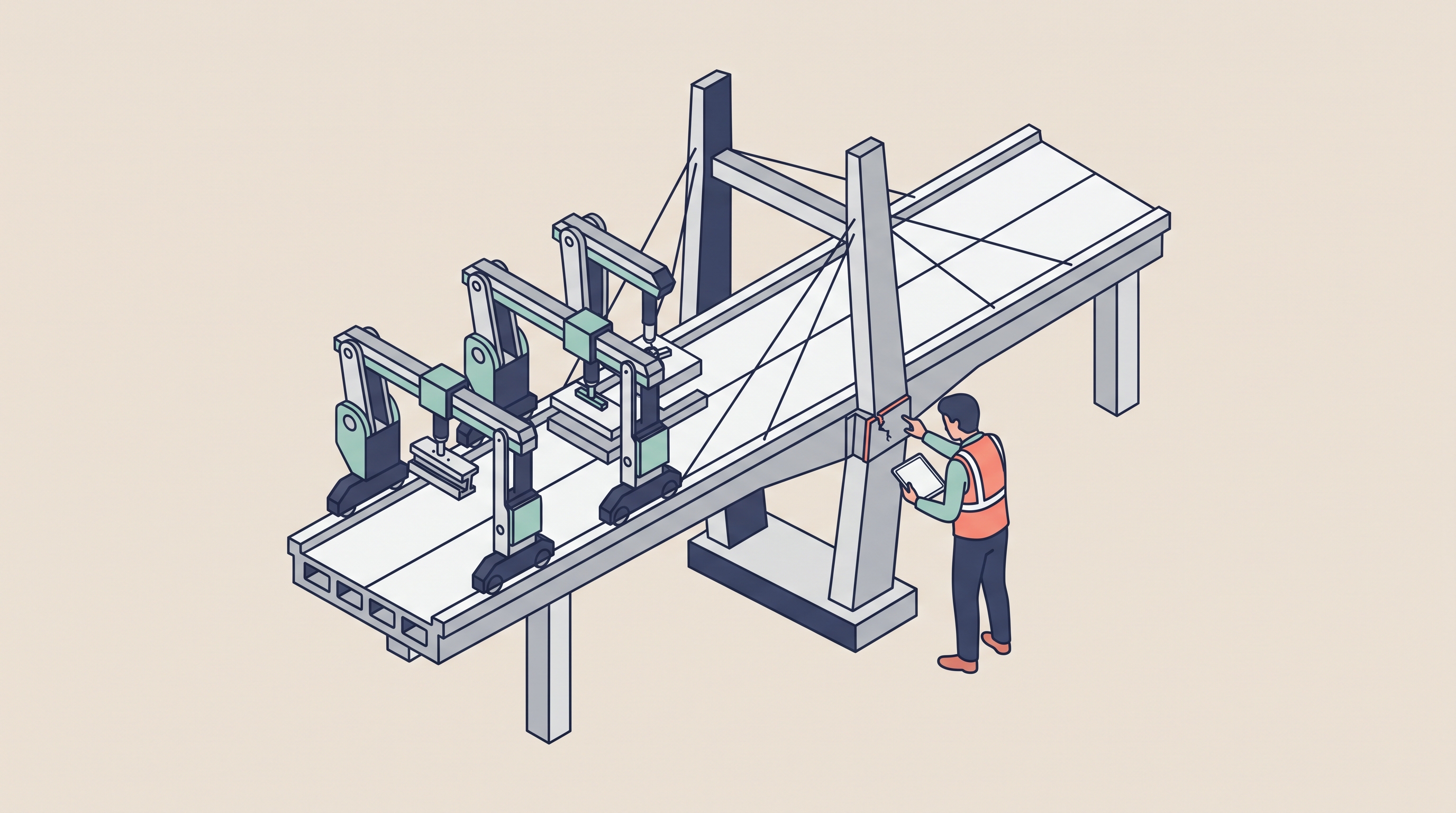
AI Code Review: Who Verifies AI-Generated Software?
AI has changed one of the basic economics of software development by making code much faster to produce.
A developer can ask an agent to implement a feature, migrate an API, generate tests, fix a bug, or refactor a component, and often have a plausible solution waiting within minutes. That can create a real productivity gain, especially when the work is repetitive or well defined, but it also shifts the bottleneck.
Someone still has to determine whether the code is actually right.
That means more than checking whether it compiles, whether the tests pass, or whether the feature behaves correctly in the most obvious scenario. The real question is whether the software still does what the business expects, handles the cases that matter, respects the architecture and security model, and avoids changing something elsewhere in the system.
As code generation gets cheaper, verification becomes more valuable.
What does good AI code review require?
Reviewing AI-generated code requires more than checking syntax or style. Developers need to verify the intended business behavior, inspect the assumptions behind the implementation, evaluate whether the tests are meaningful, and understand how the change interacts with the rest of the application.
That means experienced developers still need to ask whether the implementation actually solved the requested problem, whether it preserved existing behavior that wasn’t explicitly mentioned in the prompt, and whether it introduced a new security or architectural risk.
They also need to understand what happens when the happy path breaks down. Incomplete data, unusual inputs, failed integrations, permission boundaries, and edge cases often matter more than the scenario that was easiest to demonstrate.
AI can help with parts of that review, but the organization still needs someone responsible for deciding when the evidence is strong enough to trust the change.
Passing tests isn’t the same as being correct
Automated tests are some of the best tools developers have for making software safer to change, and they become even more valuable when AI is producing more implementation more quickly.
There is a catch, though: AI can generate the tests along with the code.
If the same misunderstanding appears in both places, everything may pass while the feature is still wrong.
Suppose an agent misinterprets a pricing rule, implements the wrong calculation, and then generates tests based on that same interpretation. From the development environment’s perspective, the feature looks healthy because the code and tests agree with each other.
The business rule is still wrong.
That’s why good AI-assisted development needs tests that are grounded independently in requirements, existing behavior, known examples, and domain expertise. A passing test suite is useful evidence, but developers still have to understand what that evidence actually proves.
Art+Logic encountered a version of this problem during an AI-assisted modernization project. Earlier automated attempts at migrating the application produced software that compiled while removing or disabling important functionality. Art+Logic instead used AI for bounded, repetitive work while experienced engineers retained responsibility for architecture, review, testing, and validation.
The important distinction wasn’t whether AI could produce working code. It was whether the team could prove that the migrated application still worked for the people who depended on it.
The harder the business rules, the more verification matters
Many applications contain behavior that isn’t obvious from the code alone.
A strange condition may exist because of a customer contract, an unusual workflow may reflect a regulatory requirement, or a validation rule that looks redundant may protect against a problem users encountered years ago. AI can analyze the implementation, but it may not know why that behavior exists unless the relevant context is available somewhere it can use.
That makes collaboration with domain experts increasingly important.
A developer reviewing generated code may need to ask the client or product owner whether a particular behavior is actually correct, because the answer can’t always be inferred from the repository. This is one reason Art+Logic’s development process combines the client’s domain knowledge with software-engineering experience: the client knows what the business requires, while developers turn those requirements into software that can be tested, operated, and changed safely.
AI can accelerate that process, but it doesn’t eliminate the need for the conversation.
AI can increase the amount of software that needs to be reviewed
There’s another consequence of faster code generation: teams can produce more change than reviewers can comfortably absorb.
A developer who once implemented one feature may now direct several agents, explore multiple approaches, and generate a much larger set of tests and supporting changes in the same period. That sounds like pure productivity until review becomes the limiting step.
At that point, the development question changes from “How quickly can we generate the implementation?” to “How much change can we verify with confidence?”
That’s a different kind of capacity problem, and the answer probably isn’t to review every AI-generated line with identical intensity. Instead, teams need better ways to evaluate risk.
A copy change and a database migration shouldn’t receive the same review, just as a small UI correction shouldn’t be treated like a change to authorization logic. The more consequential the change, the stronger the review should be.
What should always receive closer human review?
Every team will draw the boundary differently, but some changes deserve more scrutiny because mistakes are expensive, difficult to detect, or difficult to reverse.
That usually includes work involving authentication and authorization, sensitive or regulated data, database schemas and migrations, financial calculations, infrastructure, critical business rules, public APIs, external integrations, major architectural changes, and irreversible operations.
AI may still contribute substantially to those changes, but the point isn’t that developers have to type everything themselves. It’s that someone with enough context and experience needs to understand what is changing and accept responsibility for the result.
The reviewer needs to understand the system, not just the diff
In software development, a “diff” is the set of lines that were added, removed, or changed. A reviewer can inspect that diff and decide that the code looks clean and reasonable, but still miss a problem if they don’t understand the surrounding system.
There’s also a business reason developers can’t become detached from the code AI produces.
When a customer reports an issue, asks how a feature behaves, or wants to understand why a particular decision was made, the development team still needs to navigate the application and explain what’s happening. A developer who can only say, “The agent wrote that part, and the tests passed,” hasn’t transferred responsibility to the AI provider; the client still depends on the development team.
That makes code comprehension an important part of verification.
Good review isn’t just a gate before deployment. It’s also one of the ways a team maintains enough shared understanding to support the software later.
This connects directly to another risk Art+Logic has written about: key-person dependency and weak architecture. Systems become fragile when understanding is concentrated in a few people rather than expressed through architecture, tests, documentation, and consistent patterns.
AI-generated software can create the same problem in a new form if teams allow code to accumulate faster than they can understand it.
AI should make repetitive work cheaper, not judgment optional
The best use of coding agents isn’t to pretend developers no longer need to understand implementation. It’s to change where developers spend their time.
AI can take on more of the repetitive work, including generating boilerplate, applying known patterns, drafting tests, tracing dependencies, converting framework conventions, or producing a first implementation for review. That gives experienced developers more time to focus on the decisions that require judgment.
Is this the right architecture? Does the change match the business requirement? Is the security model still intact? Is there a simpler approach? What are the likely failure modes, and can another developer maintain this later?
Those questions become more important, not less, as implementation speeds up.
Art+Logic has taken that approach in both AI-assisted modernization and its broader work with AI-enabled software AI-enabled software: use AI where it improves development efficiency while keeping experienced engineering judgment around architecture, quality, security, and maintainability.
The objective isn’t to preserve old ways of writing software. It’s to take advantage of faster implementation without giving up confidence in the result.
The new bottleneck may be trust
AI coding tools will keep improving, and teams will almost certainly become more comfortable delegating larger portions of implementation.
That doesn’t make verification disappear; it changes what verification looks like.
Some confidence will come from automated tests, static analysis, security tooling, evaluation frameworks, and even additional AI agents reviewing other agents’ work. However, a business still needs a defensible answer to a basic question: Why do we believe this software is correct?
For low-risk changes, that answer may become increasingly automated. For changes involving important business logic, customer data, architecture, security, or irreversible actions, experienced people will still need to understand the evidence and make the call.
AI can write more code than ever before, which is useful. The competitive advantage will increasingly come from knowing which code to trust, which code to question, and how to tell the difference.
FAQs
Does AI-generated code still need human review?
Yes, particularly when a change affects important business rules, security, sensitive data, architecture, integrations, or other high-impact behavior. Automated tools can provide evidence, but experienced developers still need to determine whether the implementation satisfies the real requirement.
Can AI-generated tests be trusted?
They can be useful, but generated tests shouldn’t be treated as independent proof of correctness. If the AI misunderstands the requirement, it may encode the same misunderstanding in both the implementation and the tests.
What should developers check when reviewing AI-generated code?
Developers should verify business behavior, architectural fit, security boundaries, error handling, edge cases, test quality, maintainability, and interactions with other parts of the application. Review depth should increase with the risk of the change.
Is AI replacing software developers?
AI is changing how developers spend their time rather than eliminating the need for software engineering. As implementation becomes faster, architecture, verification, system understanding, security, and business-rule validation become more important.
Why is verification becoming a bottleneck in AI software development?
Coding agents can produce implementation and tests much faster than developers traditionally could, which increases the volume of software changes that need to be understood, evaluated, and validated before they can safely reach production.