
Two Minutes on Tech | Issue #66
AI can now generate code quickly.
It can build applications, produce functions, and accelerate development in ways that were not possible a few years ago.
That shift has led to a recurring question:
Do companies still need software engineers?
On the surface, it sounds reasonable, but it assumes software engineering is primarily about writing code.
It is not.
AI Can Write Code. It Cannot Understand Systems.
AI is effective at generating output, but it does not understand the context around that output. It does not account for regulatory requirements, operational risk, integration complexity, or long-term architectural trade-offs. It does not anticipate what happens when a system scales, when dependencies shift, or when edge cases emerge under real-world conditions.
Those constraints are not optional. They determine whether software functions beyond a controlled environment.
This is where experienced engineers remain essential. Engineering is not just implementation; it is the interpretation of constraints into systems that can hold up over time.
If AI is accelerating output in your organisation but not improving system reliability or maintainability, the issue is usually not tooling.
Identify your system-level decision bottlenecks →
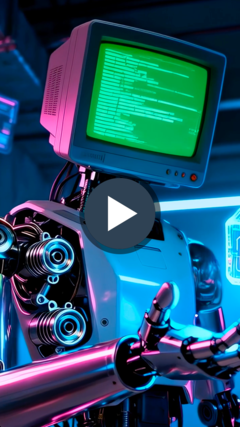
The Real Role of Engineers Is Shifting, Not Disappearing
The presence of AI changes how software gets produced, not what it requires to succeed. Code generation becomes faster. Iteration becomes easier. Prototyping becomes cheaper.
But the complexity does not go away.
It moves.
Into architecture decisions. System design. Risk management. Integration choices. Long-term maintainability. In that environment, the value of engineering shifts toward understanding how parts of a system behave together, not just how to produce individual parts quickly.
The more automation increases at the code level, the more important system-level judgment becomes.
The Core Distinction
The question is not whether AI can write software. It can.
The real question is whether a system built only on generated output can survive real-world constraints over time.
In most cases, it cannot.
Software succeeds not when code is produced efficiently, but when it remains stable, understandable, and adaptable as conditions change.
That requires engineering, not just as a role, but as a discipline.
What’s New in Tech
- Google is reportedly developing new custom chips designed to run Gemini models more efficiently, signalling a continued push to optimise AI performance through tighter hardware and software integration rather than relying solely on general-purpose compute.
- Hackers are actively exploiting recently patched WordPress vulnerabilities, exposing millions of websites to potential compromise and reinforcing how quickly known security flaws are weaponised once fixes are released.
- A recent episode of Software Engineering Daily explores “agentic DevOps” at AWS, focusing on how automation is increasingly shifting from scripted workflows toward AI-assisted systems that can manage and execute operational tasks with less human intervention.
- Microsoft has rolled out fixes for a series of Windows 11 issues affecting Dell laptops, but the update also highlights limitations in bypassing staged update queues, underscoring the ongoing trade-offs between stability, rollout control, and user urgency in operating system updates.
At Art+Logic, we combine AI-enabled development with deep engineering expertise to build systems that hold up under real operational complexity.
Because companies do not just need code.
Let’s help you build systems that continue to work when conditions change.