Legacy Software Modernization Costs for Mid-Sized Businesses: What Actually Determines the Budget?
Published Tue, Sep 15, 2026
“How much does legacy software modernization cost?” sounds like a straightforward budgeting question.
Unfortunately, it doesn’t have a responsible one-size-fits-all answer.
The cost of modernizing legacy software depends less on the age of the application than on what needs to change, what must be preserved, how well the current system is understood, how much of the work can be accelerated safely with AI-assisted development, and how much operational risk the business can tolerate during the transition.
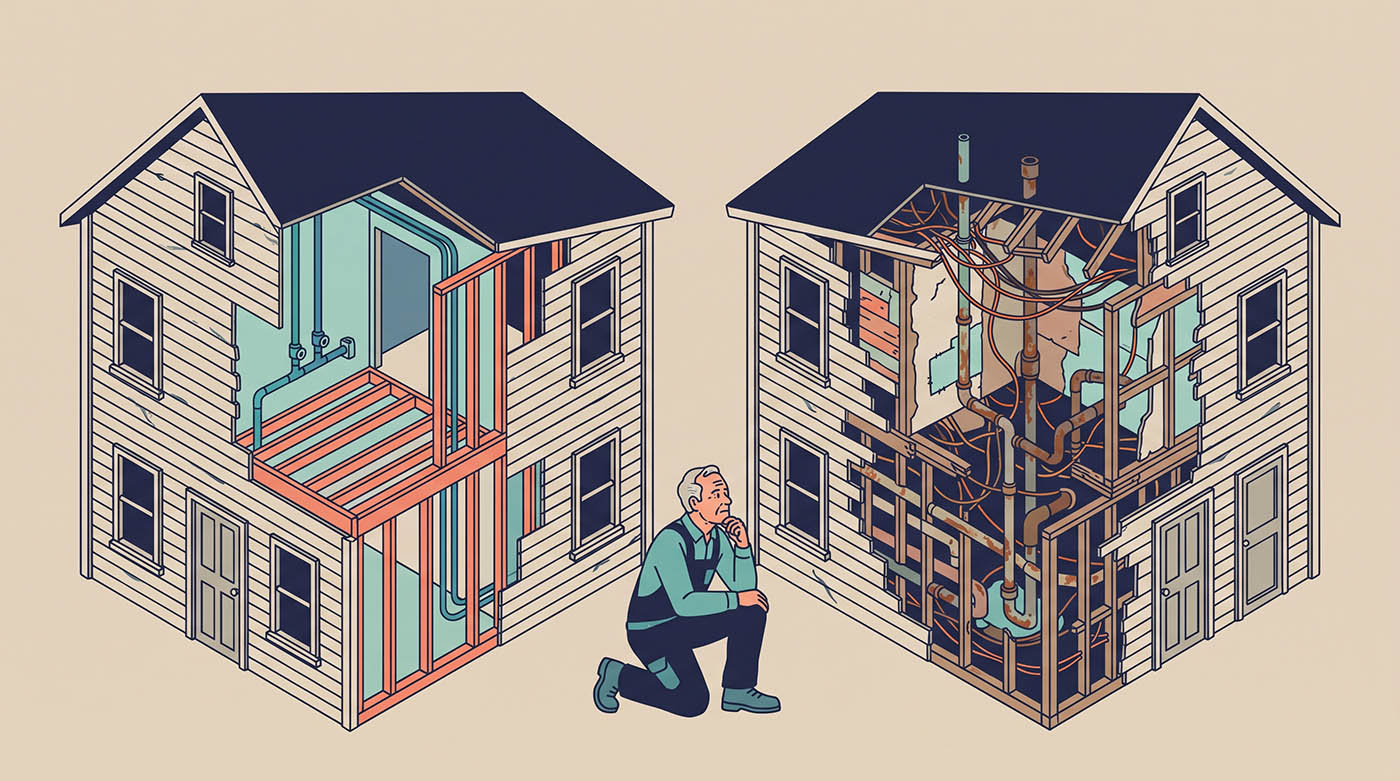
Two applications that appear similar from the outside can require very different modernization efforts. One may have clean boundaries, reliable tests, well-understood business rules, and straightforward integrations. The other may contain undocumented workflows, tightly coupled components, aging dependencies, fragile data structures, and years of accumulated exceptions that the business still depends on.
AI can change the economics of some of that work. It can help experienced development teams analyze unfamiliar code, document systems, generate tests, and accelerate repetitive migration or refactoring tasks. But using AI does not eliminate the need to understand the system or the risks of changing it. Art+Logic’s experience with AI-assisted modernization has shown that large-scale automated conversion can produce code that appears technically successful while losing important application behavior. The safer approach pairs AI-assisted implementation with human-led architecture, testing, and validation.
That is why meaningful modernization budgets usually come from understanding the system first, not from applying a generic price to its size.
For mid-sized businesses evaluating a legacy application, the more useful question is:
What factors will determine our modernization budget, and which of those factors can we control?
What Determines the Cost of Legacy Software Modernization?
The largest budget drivers are usually the modernization strategy, the condition and complexity of the existing application, the amount of business logic that must be preserved, data and integration requirements, testing needs, security and compliance constraints, migration complexity, the appropriate use of AI-assisted development, and the degree of uncertainty surrounding the current system.
Those factors interact.
A technically old application with limited integrations and well-understood workflows may be relatively straightforward to improve. A newer application with tightly coupled architecture, undocumented dependencies, critical data, and little automated testing may require much more careful work.
Likewise, two projects with similar technical scope may require different levels of effort depending on how much of the work is repetitive and pattern-based enough to benefit from AI assistance.
This is why the first step in budgeting should be to understand what kind of modernization project you actually have.
The Modernization Strategy Changes the Budget
“Modernization” can describe several very different types of work.
Most modernization projects will fall under the common “5 Rs” framework: retain, retire, rehost or replatform, refactor or rearchitect, and rebuild or replace. The appropriate choice depends on the value the current software provides, where its risks and constraints exist, and what the organization needs the system to support next. That decision has a fundamental effect on the budget.
Rehosting an application without substantially changing its internal behavior is a different project from restructuring its architecture. Refactoring selected high-friction components is different from rebuilding an entire application. Replacing one obsolete dependency is different from redesigning how the system stores data, integrates with other platforms, and supports users.
The important budgeting lesson is that modernization is not automatically synonymous with a rewrite.
In fact, deciding what not_ to rebuild can be one of the most important scope decisions in the project.
If stable parts of the current system continue to provide value, preserving them may let the modernization effort focus resources on the components that create the greatest risk or business constraint. Art+Logic’s modernization approach similarly emphasizes understanding and preserving the business value embedded in a system rather than assuming everything old needs to be replaced.
The Existing Codebase Is Only Part of the Scope
It is tempting to estimate modernization by looking at the application itself: its codebase, programming language, framework, screens, or features.
Those matter, but they are not the whole system.
Legacy applications often sit in the middle of a much larger operational environment. They may connect to databases, identity providers, reporting tools, payment systems, hardware, third-party APIs, partner platforms, internal services, scheduled processes, spreadsheets, or manual workflows.
Some of those relationships may be obvious in the architecture. Others may have developed gradually and never been formally documented.
That means the real modernization scope may include more than replacing old code. It may require understanding how an application fits into the business around it.
A smaller application with many critical dependencies can therefore present a more complicated modernization problem than a larger but relatively self-contained system.
Undocumented Business Logic Can Be a Major Budget Driver
Legacy software does more than execute code. Over time, it can become a repository for institutional knowledge.
A validation rule may exist because of a customer requirement. An unusual workflow may reflect a regulatory constraint. A calculation may encode years of domain knowledge. A special case that looks unnecessary to a developer may support a business process no one thought to document separately.
This makes modernization different from ordinary greenfield development.
The team is not simply deciding what the new software should do. It also has to determine what the existing software already does, and which of those behaviors still matter.
Art+Logic describes legacy systems as containing operational knowledge, workflows, edge cases, user expectations, and business logic that may not be documented anywhere else.
The less clearly that behavior is documented, the more discovery and validation the modernization effort may require.
This is also one reason an apparently simple rewrite can become expensive. Recreating visible features is one thing. Reconstructing years of hidden business decisions is another.
Architecture Determines How Easily the System Can Change
Modernization cost is also affected by how tightly the current application is coupled.
In a well-separated system, a team may be able to replace or improve one component while leaving other components relatively untouched.
In a tightly coupled system, changing one area may affect many others.
A database change may alter reporting behavior. Updating an authentication mechanism may touch numerous workflows. Replacing a framework may expose assumptions throughout the application. An integration that appears isolated may turn out to influence several business processes.
This is why architecture affects more than technical elegance. It affects the amount of coordinated work required to make changes safely.
For budgeting purposes, it’s important not just to ask “How old is this architecture?” You also have to consider how independently its parts can be changed.
The harder it is to isolate change, the more planning, regression testing, and sequencing the project is likely to require.
Integrations Expand the Modernization Boundary
Integrations deserve special attention because modernization projects rarely happen in isolation.
A legacy system may exchange data with internal applications, customer systems, vendors, cloud services, authentication platforms, reporting infrastructure, or APIs that have evolved independently over time.
Modernizing the core application may require preserving those interfaces, replacing them, or temporarily supporting both old and new approaches.
Each integration raises practical questions.
Who owns the other system? Is there current documentation? Can it be tested outside production? Does the integration rely on a supported API, or on behavior that has simply continued working for years? Can downstream systems change at the same time?
These are budget questions because integration work often involves coordination as much as implementation.
The cost is shaped not only by how difficult an interface is to build, but by how confidently the team can understand, test, and transition it.
Data Migration Can Become Its Own Project
Data is another area where surface-level estimates can be misleading.
Changing an application while leaving its existing data model untouched is very different from moving data into a new structure.
A modernization effort may need to reconcile inconsistent records, map older concepts to new ones, preserve historical relationships, validate transformed data, maintain auditability, or support old and new versions of the application during the transition.
The challenge is not simply moving information from one location to another.
The challenge is proving that the information still means the same thing when it arrives.
If an organization has significant historical data or if that data supports mission-critical workflows, migration planning should be treated as a first-class part of the modernization scope rather than an implementation detail near the end of the project.
Testing Determines How Safely You Can Move
Automated tests can materially affect the shape of a modernization project because they help establish whether existing behavior has been preserved.
If a legacy application already has reliable test coverage around critical workflows, developers have a stronger safety net as they refactor or replace components.
If it does not, the modernization team may need to establish that safety net as part of the work.
That can involve documenting expected behavior, identifying critical workflows, building automated tests, performing manual validation, or comparing outputs between the existing and modernized systems.
This work adds scope, but skipping it does not make the underlying risk disappear.
It simply moves that risk elsewhere.
For a business-critical system, the relevant budgeting question is therefore not, “Can we avoid spending time on testing?” Rather, the question is: What level of evidence do we need before we trust the modernized system with real operations?
AI-assisted development can help here, too. AI tools can assist engineers with generating test cases and identifying areas of a legacy codebase that deserve closer investigation. But generated tests still need to represent the application’s actual expected behavior. That makes human review especially important when the existing system contains undocumented or ambiguous business rules.
Security and Compliance Affect More Than the Technology Choice
Security modernization is sometimes treated as a side benefit of replacing old technology.
In practice, security requirements can influence architecture, infrastructure, authentication, authorization, logging, data handling, deployment pipelines, testing, and operational procedures.
The same applies to compliance obligations.
If the application handles regulated or sensitive information, modernization may need to account for controls that extend beyond the user interface and application code.
Art+Logic’s secure software development work includes practices such as code audits, threat modeling, infrastructure hardening, secure development lifecycle practices, and improving security as part of legacy modernization.
Whether every project needs all of those activities depends on the system. The budgeting principle is simpler:
Security requirements should be identified early enough to shape the architecture rather than being added after major implementation decisions have already been made.
Business Continuity Can Increase or Reduce the Right Kind of Cost
A company rarely has the luxury of turning off an important legacy application while its replacement is being built.
The existing system may still need to serve customers, employees, partners, or core operational processes throughout the modernization effort.
That constraint changes the project.
Some organizations may be able to make a relatively clean transition. Others may need incremental releases, parallel operation, compatibility layers, staged data migration, or rollback plans.
Those requirements can add work compared with replacing a noncritical system in a single cutover.
But business continuity should not be viewed simply as an extra project expense.
It is part of the risk model.
Art+Logic’s modernization approach emphasizes incremental migration where appropriate, breaking work into manageable phases so critical operations do not have to depend on a single large transition.
For a mid-sized business, that distinction can be especially important. The technically fastest route and the operationally safest route are not always the same.
Internal Availability Affects the External Budget
Another easily overlooked cost driver is access to the people who understand the system.
Modernization teams need answers.
Why does this workflow behave differently for this customer? Which reports are actually business-critical? Can these old records be archived? Is this feature unused, or does a small but important group depend on it? Is an unusual rule obsolete, or is it protecting the company from a real operational problem?
External developers can inspect source code and infrastructure, but code does not always explain why a business rule exists.
That context often has to come from product owners, operational staff, subject-matter experts, IT teams, or long-time users.
When those people are available and decisions can be made efficiently, uncertainty falls.
When no one is sure how important parts of the application are supposed to behave, technical discovery becomes business discovery as well.
That uncertainty should be treated as part of the budget conversation.
Uncertainty Is One of the Most Important Cost Drivers
A modernization estimate becomes more reliable as uncertainty decreases.
Early in the process, teams may not know which modules are still actively used, where important business rules live, which integrations are fragile, whether existing tests can be trusted, or how much of the current architecture can reasonably be preserved.
Pretending those unknowns do not exist does not create a more accurate estimate.
It creates a more confident-looking one.
This is where both discovery and AI-assisted engineering can change the budgeting equation.
Traditional code investigation can require developers to trace dependencies, inspect unfamiliar components, reconstruct architecture, document behavior, and identify recurring patterns manually. AI-assisted tools can help engineers perform parts of that analysis more efficiently by assisting with codebase exploration, documentation, dependency analysis, test generation, and other repeatable work. Art+Logic specifically identifies these uses as valuable applications of AI during legacy modernization.
But faster analysis does not make discovery unnecessary.
It can make discovery more efficient.
That distinction matters.
The purpose of discovery is not simply to consume development hours before “real” work begins. It is to turn unknowns into decisions.
And decisions are much easier to budget than assumptions.
How Can AI-Assisted Modernization Affect the Budget?
AI-assisted development can change the cost structure of a legacy modernization project when it is applied to the right kinds of work.
Legacy systems often contain large amounts of implementation that must be inspected, documented, tested, translated, or rewritten. Much of that work requires engineering judgment. Some of it is also repetitive and pattern-based.
That second category is where AI can be especially useful.
Depending on the application and modernization strategy, AI-assisted workflows can help developers:
- Explore and inventory unfamiliar legacy code
- Trace dependencies and recurring implementation patterns
- Draft technical documentation
- Generate or expand automated tests
- Translate repetitive code patterns between frameworks or languages
- Accelerate boilerplate implementation
- Assist with targeted refactoring
- Research differences between old and new platforms
- Surface code that warrants closer human review
Art+Logic describes AI-assisted development as a way to accelerate code analysis, refactoring, and migration while keeping experienced engineers responsible for decisions, validation, and preservation of critical business logic.
That can make previously labor-intensive modernization work more feasible.
But AI does not reduce every part of the modernization budget equally.
It is less useful as a substitute for architectural judgment, ambiguous business decisions, stakeholder alignment, UX strategy, security decisions, complex migration planning, or determining whether an obscure legacy behavior should still exist.
In other words, AI can accelerate engineering work without eliminating the work of understanding what the software is supposed to do.
That distinction should be reflected in the estimate.
Why “Just Have AI Rewrite It” Is the Wrong Budgeting Model
The most aggressive version of AI-assisted modernization sounds appealing: feed an old application into a model, ask it to convert the code, and dramatically reduce the project.
The problem is that modernization success cannot be measured by whether new code compiles.
It has to preserve the business behavior that matters.
Art+Logic encountered this directly while modernizing a long-standing Xamarin mobile application to .NET MAUI. Earlier attempts at large-scale generative-AI conversion produced builds that technically compiled but removed or disabled important functionality. Art+Logic instead used a phased approach in which engineers migrated the application incrementally and applied AI to repetitive, pattern-based tasks while maintaining human oversight of architecture, logic, testing, and validation.
That example illustrates a broader budgeting principle:
AI is most valuable when it compresses mechanical effort without outsourcing responsibility for correctness.
Used well, AI can reduce the amount of time experienced engineers spend on repetitive modernization tasks and allow more of their attention to go toward difficult decisions.
Used indiscriminately, it can simply create a new category of work: finding and correcting plausible-looking mistakes.
For a mid-sized business evaluating modernization proposals, it is therefore worth asking not merely whether a development partner “uses AI,” but how AI fits into the engineering process and where human review remains mandatory.
AI Can Make Selective Modernization More Attractive
AI-assisted development also has implications for the decision between incremental modernization and a complete rewrite.
Historically, organizations may have looked at a large legacy codebase and concluded that understanding or transforming it selectively required too much manual effort. That could make a replacement project appear simpler, even when large portions of the existing application still had value.
AI-assisted code analysis, documentation, testing, and refactoring can change that calculation.
If engineers can understand and transform useful areas of an existing system more efficiently, preserving good business logic while replacing problematic technical foundations may become more practical.
That does not mean selective modernization will always be the right choice.
It means the organization has another factor to evaluate before concluding that an expensive clean-slate rewrite is the only viable path.
Art+Logic describes AI-assisted modernization as a way to support incremental progress rather than assuming that modernization requires wholesale replacement.
What Can a Mid-Sized Business Do to Control Modernization Costs?
Organizations cannot remove every source of complexity from a legacy system. They can, however, make choices that improve budget clarity and prevent unnecessary work.
The most useful steps are:
- Define the business outcome before defining the technical solution. Identify what the current software prevents the organization from doing and what must become possible after modernization.
- Separate essential behavior from historical baggage. Not every feature, workflow, or technical decision deserves to survive the transition.
- Investigate before committing to a full rebuild. A targeted refactor, replatforming effort, or phased replacement may solve the important problems without recreating the entire system.
- Evaluate where AI can safely accelerate the work. Code analysis, documentation, testing, repetitive migration, and pattern-based refactoring may benefit from AI assistance, while architecture and business-critical validation still require experienced human judgment.
- Identify data and integration dependencies early. They can dramatically expand the true project boundary.
- Make subject-matter experts available. Faster answers to business-rule questions reduce ambiguity.
- Plan for testing and migration from the beginning. They are core modernization activities, not cleanup tasks.
- Break the work into meaningful phases where possible. Smaller modernization boundaries provide opportunities to validate assumptions before committing to subsequent work.
- Ask how AI-generated work will be reviewed. AI assistance should be part of a controlled engineering workflow, not a replacement for one.
These practices do not make complex modernization projects simple.
They make the complexity more visible and manageable—and allow automation to be applied where it provides genuine leverage.
Why a Price Range Before Discovery Can Be Misleading
Organizations understandably want a budget before investing significant effort in a modernization project.
But there is an important difference between a preliminary planning number and a reliable implementation estimate.
Before a team understands the architecture, business logic, integrations, data, testing environment, infrastructure, migration constraints, and opportunities for AI-assisted acceleration, an estimate has to rest on assumptions about those things.
The more assumptions involved, the wider the uncertainty around the budget.
This is why comparing modernization partners entirely on an early headline estimate can be risky. Two estimates may appear to describe the same project while actually assuming very different scopes and development approaches.
One may assume existing business behavior is already documented. Another may include reconstructing it.
One may assume data will stay where it is. Another may include migration.
One may assume a single cutover. Another may account for parallel operation.
One may include comprehensive regression testing. Another may assume the client will handle validation.
One may use AI strategically to accelerate code analysis and repetitive migration. Another may estimate the same tasks as entirely manual work.
And a third may assume a level of AI automation that is unrealistic for a business-critical application.
The useful question is not only:
“What will this cost?”
It is also:
“What assumptions does this estimate depend on, and how will the engineering approach manage those assumptions?”
How Should You Build a Legacy Modernization Budget?
A credible modernization budget should connect technical work to business priorities and explicitly account for uncertainty.
Start with the outcome the organization needs from the software.
Then determine what prevents the current system from delivering that outcome.
From there, evaluate which parts should remain, which need to change, and which can disappear entirely. Identify the dependencies that make those changes risky. Determine which parts of the work can benefit from AI-assisted engineering and which require direct human analysis and decision-making. Define how the organization will verify that critical business behavior and data survive the transition.
Only then can the team create a modernization roadmap whose scope reflects the actual system rather than an imagined replacement.
This is a more disciplined way to budget because it treats modernization as a business and engineering problem together.
It also avoids two opposite mistakes: budgeting as though every line of modernization work must be performed manually, or budgeting as though AI can safely automate the entire transformation.
Neither assumption reflects how effective AI-assisted modernization actually works.
The Cheapest Modernization Project Is Not Necessarily the Smallest Estimate
Modernization decisions should account for more than the cost of implementation.
A low initial estimate can become expensive if it depends on incomplete assumptions, creates operational disruption, discards valuable business logic, or leaves the organization with another difficult-to-change system.
Likewise, the most ambitious technical transformation is not automatically the best investment.
And the proposal that promises the most aggressive AI automation is not necessarily the most efficient.
The right scope is the one that addresses the constraints that matter while preserving the parts of the existing system that still provide value. The right development process applies AI where it can accelerate useful work while keeping experienced engineers accountable for architecture, correctness, security, and business behavior.
Art+Logic’s modernization approach reflects both principles: understand what provides value, decide what should be retained or changed, and use AI-assisted development to make appropriate parts of that transformation more efficient without surrendering engineering judgment.
For mid-sized businesses, that creates a more useful way to think about budget.
Do not begin by asking how much it costs to replace the old system.
Begin by asking:
What needs to change? What needs to survive? What can AI safely accelerate? What risks need to be controlled? And what does the business need the software to make possible next?
Those answers determine the project.
And the project determines the budget.
FAQs
How much does legacy software modernization cost?
There is no responsible universal price for legacy software modernization. Cost depends on the modernization strategy, application architecture, business logic, integrations, data migration, testing requirements, security needs, infrastructure, operational constraints, and the amount of uncertainty in the existing system. The extent to which AI-assisted development can safely accelerate analysis, testing, refactoring, and migration can also affect the required effort.
What is the biggest factor affecting legacy software modernization cost?
There is rarely a single factor, but scope and uncertainty are especially important. The more of the system that must change—and the less the team initially knows about its dependencies and business behavior—the harder the project is to estimate and plan.
Can AI reduce legacy software modernization costs?
AI-assisted development can reduce effort in some parts of modernization by helping engineers analyze code, generate documentation and tests, identify patterns, and accelerate repetitive migration or refactoring work. It does not eliminate the need for experienced developers to make architectural decisions, preserve business logic, validate generated code, and test the resulting system. Art+Logic uses a human-led, AI-assisted approach rather than treating AI as an autonomous replacement for the modernization team.
Can AI automatically rewrite a legacy application?
AI can assist with code conversion, but a successful modernization project requires more than syntactically valid new code. Business rules, integrations, data behavior, security, workflows, and edge cases still have to be preserved or intentionally changed. Art+Logic has documented a modernization project in which wholesale AI conversion produced compiling code while removing important functionality, leading the team to adopt a phased, human-supervised approach instead.
What parts of legacy modernization are best suited to AI assistance?
AI can be particularly useful for codebase exploration, documentation, test generation, dependency analysis, repetitive code transformation, boilerplate implementation, and pattern-based refactoring. Tasks involving ambiguous business requirements, architecture, security decisions, complex migration strategy, and acceptance of business-critical behavior still require experienced human judgment.
Is it cheaper to modernize legacy software or rebuild it?
Neither approach is automatically cheaper. If significant portions of the existing system still provide value, selectively modernizing them may avoid unnecessary replacement work. AI-assisted analysis and refactoring may also make selective modernization more practical in some cases. If the current architecture fundamentally prevents the business from reaching its goals, a larger rebuild or replacement may still be justified.
Does legacy modernization require replacing the entire application?
No. Modernization can include retaining stable components, retiring unnecessary ones, rehosting or replatforming infrastructure, refactoring or rearchitecting selected areas, or rebuilding and replacing components that no longer fit the organization’s needs.
Why is legacy software modernization difficult to estimate?
Legacy systems often contain undocumented business rules, hidden dependencies, aging integrations, inconsistent data, limited automated tests, and operational requirements that are not obvious from the source code alone. Estimates become more reliable as those unknowns are investigated. AI-assisted analysis can help engineers investigate them more efficiently, but it does not remove the underlying need for discovery and validation.
How can a company reduce the cost of a modernization project?
Companies can control unnecessary cost by defining business priorities clearly, identifying critical workflows early, making subject-matter experts available, removing obsolete scope, evaluating alternatives to a full rewrite, understanding integrations and data requirements, using AI strategically for appropriate development tasks, and dividing the work into manageable phases.
Should we get a fixed modernization estimate before an assessment?
An early estimate can be useful for planning, but its reliability depends on how much is already known about the system. When architecture, integrations, data, business rules, testing, or migration requirements remain unclear, an assessment can help replace assumptions with a more defensible scope and budget.