Assessing Legacy Software Risks: Uncovering Key Priorities Prior to Modernization
Published Thu, Sep 17, 2026
You may have noticed that legacy software can sometimes yield two seemingly contradictory truths at the same time.
The system still works.
And everyone is increasingly nervous about touching it.
Perhaps releases take longer than they used to, or an important integration depends on technology no one wants to change. Or maybe a critical workflow is understood by just one long-tenured employee, security updates are getting harder, and a new product idea keeps running into architectural limitations.
None of those problems necessarily means the application needs to be replaced.
But they do mean you need a clearer picture of the risk you’re carrying.
That’s where a legacy software risk assessment becomes valuable. Before committing to a modernization project, an assessment can help you separate manageable technical debt from genuine business risk—and decide what actually deserves attention.
“It Still Works” Doesn’t Tell You How Healthy the System Is
Legacy software often survives precisely because it is valuable.
It may support revenue-generating products, internal operations, customer workflows, reporting, compliance processes, or specialized business rules accumulated over many years. Replacing it casually would be irresponsible.
At the same time, operational software can carry substantial risk without experiencing an obvious failure. We’ve seen situations where a system can continue processing transactions while becoming harder to secure, or keep serving customers while requiring progressively more effort to release improvements. A system can also produce the right result while depending on undocumented logic that only one person understands, and run reliably today while making the next strategic initiative prohibitively difficult.
That distinction matters. As we explore in Is Your Legacy Software Holding the Business Back?, the right question isn’t simply whether legacy software still works. It’s whether its maintenance cost, security exposure, operational risk, and architectural limitations are beginning to interfere with business priorities.
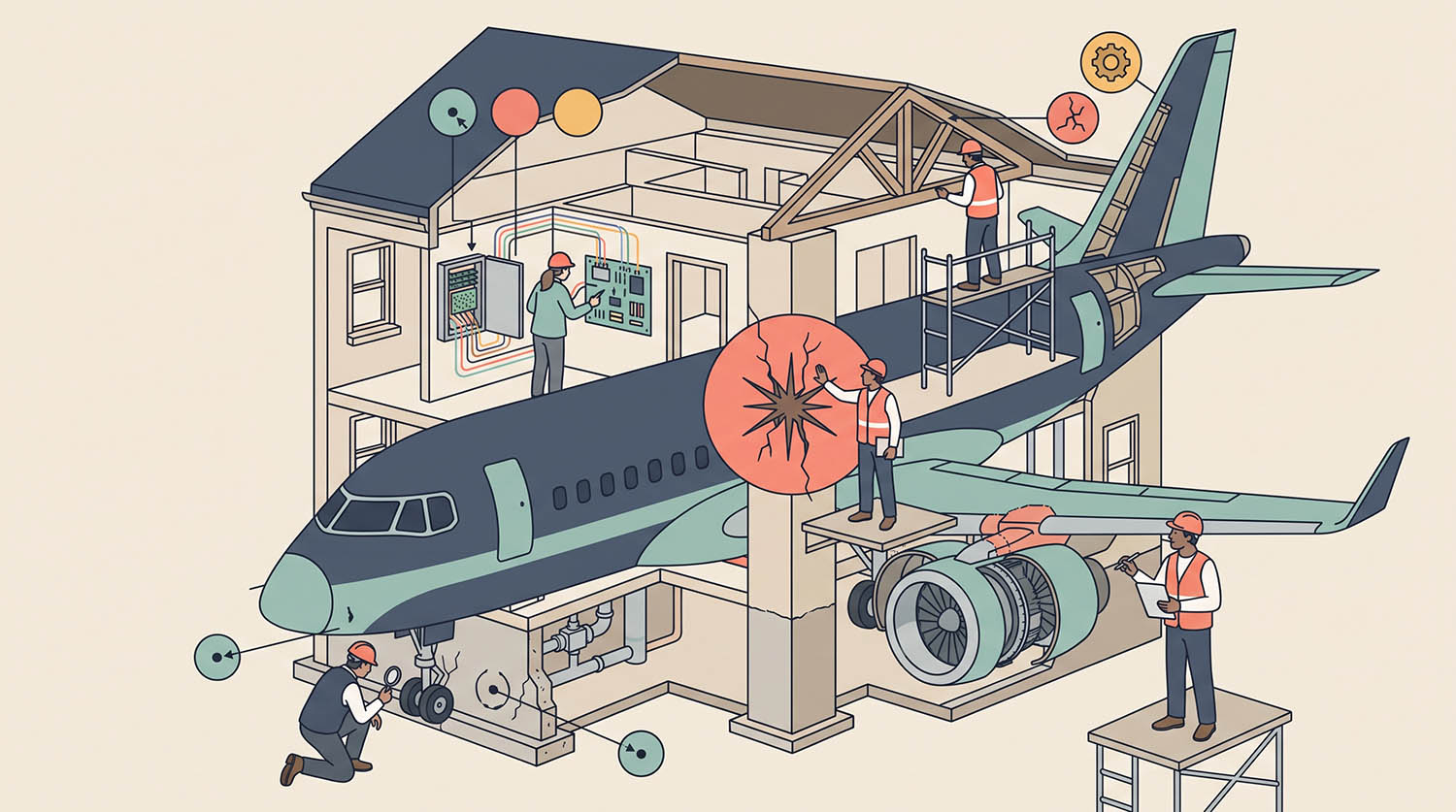
Legacy Risk Is Bigger Than Old Code
Age alone is a poor way to judge software.
A fifteen-year-old application that is stable, well understood, adequately secured, inexpensive to maintain, and appropriate for its job may present less risk than a five-year-old application with brittle architecture and weak testing.
What matters is the system around the code.
A useful assessment should help you consider risks such as:
- Technology risk: Are frameworks, libraries, operating systems, databases, or infrastructure approaching or past support?
- Security risk: Are there known vulnerabilities or dependencies that are difficult to update safely?
- Knowledge risk: Does maintaining the application depend heavily on one developer, administrator, vendor, or subject-matter expert?
- Delivery risk: Do small changes require disproportionate investigation, testing, or coordination?
- Operational risk: How difficult would it be to recover from a significant failure?
- Integration risk: Are critical connections fragile, poorly documented, or based on outdated technologies?
- Business agility risk: Is the application preventing new products, workflows, partnerships, pricing models, automation, analytics, or AI capabilities?
- Maintenance risk: Is increasing engineering effort being spent simply keeping the current system functioning?
Those issues are connected.
Poor test coverage makes framework upgrades riskier. Undocumented integrations increase key-person dependency. Fragile architecture slows development. Delayed updates can increase security exposure. Eventually, what started as technical debt begins constraining business decisions.
That is the point at which legacy software stops being solely an IT concern.
The Biggest Risk May Be What You Don’t Know
Some legacy systems are difficult to modernize because they are old.
Others are difficult because no one has a complete picture of what they actually do.
Years of business logic may be embedded in code. Integrations may depend on undocumented behavior. Users may rely on edge cases that never became formal requirements. Reports that look unimportant may feed critical downstream processes.
That uncertainty can make organizations hesitant to act, and for good reason.
A modernization project that begins without understanding those dependencies can introduce exactly the disruption it was supposed to prevent.
This is one reason Art+Logic approaches modernization as a decision problem before treating it as a technology problem. Choosing whether to retain, retire, replatform, refactor, rearchitect, rebuild, or replace a system requires understanding what remains valuable and where the real constraints live. Our 5 Rs of Application Modernization framework provides a practical way to think through those options. The point isn’t to choose the most dramatic form of modernization. It’s to choose the approach that addresses the risks and constraints that actually matter.
You don’t want to modernize everything simply because it’s old.
You want to address the parts of the system creating meaningful risk or preventing the business from moving forward.
A Risk Assessment Helps Turn Anxiety Into Priorities
Legacy-system conversations often begin with anecdotes:
- “Deployments make everyone nervous.”
- “We can’t find people who know this framework.”
- “That integration breaks all the time.”
- “We’ve talked about replacing this for five years.”
Those observations are useful signals, but they are difficult to turn into an investment decision by themselves.
A risk assessment creates a more structured starting point.
Rather than tackling the overwhelming question, “Should we replace our legacy system?” consider starting with more targeted, practical questions:
- Exposure: Where is our highest vulnerability?
- Stability: What components are stable enough to remain as-is?
- Escalation: Which risks are actively compounding over time?
- Constraints: Which current limitations directly block key business goals?
- Dependencies: What happens if a critical vendor, employee, or third-party dependency disappears overnight?
- Prioritization: Which issues demand immediate intervention, and which can safely wait?
Shifting your approach in this way fundamentally changes the modernization dialogue.
The objective is no longer to justify a predetermined rewrite or migration. It is to understand the current situation well enough to make the next decision with confidence.
Assessment Comes Before the Modernization Roadmap
One of the most expensive modernization mistakes is choosing the solution too early. Prematurely choosing a solution remains one of the most costly errors in modernization projects.
Organizations frequently fall into common pitfalls:
- Misidentifying the primary constraint: Committing to a cloud migration without verifying if infrastructure is the core bottleneck.
- Overlooking hidden complexity: Initiating a code rewrite to address maintainability, only to uncover years of embedded, undocumented business logic.
- Over-scoping the effort: Embarking on a massive system replacement when targeted, incremental improvements could have mitigated the primary risks.
Legacy applications do not follow a single modernization playbook. Depending on the system, the appropriate path may be to:
- Retain or retire the system entirely.
- Upgrade infrastructure to gain supported platform environments.
- Refactor or repair specific target areas.
- Rebuild components that truly require replacement.
Most technology portfolios require a hybrid approach combining several of these tactics across different applications. A structured assessment provides the clarity required to determine the right strategy for each component.
Start With Risk, Not a Rewrite
Modernization can sound like a major transformation program, which is one reason organizations put it off.
But the first step doesn’t need to be a rewrite, migration, or multi-year roadmap.
It can simply be understanding your exposure.
Art+Logic’s Legacy Modernization Risk Assessment is designed to help start that conversation.
If you are responsible for an aging application and aren’t sure whether its current limitations amount to manageable technical debt or a growing business risk, the assessment can help you take a more systematic look at the situation.
From there, you can decide what deserves deeper investigation—and what does not.
That distinction can save an organization from two costly mistakes: modernizing too aggressively without understanding what should be preserved, or waiting until accumulated risk turns into an urgent problem.
Modernization Should Be a Business Decision
The age of an application isn’t a business case.
Neither is a developer’s dislike of an old framework.
A stronger case connects the condition of the software to outcomes the organization cares about: continuity, security, cost, delivery speed, customer experience, operational efficiency, growth, and the ability to pursue new opportunities.
For organizations deciding how much to invest, the question also isn’t necessarily “rewrite or do nothing.” As we discuss in Rebuild or Modernize? A Guide to Making the Right Software Investment, the better decision often comes from comparing the risks, business value, and future fit of different paths—and recognizing that modernization can be incremental.
That’s ultimately what a legacy risk assessment should help you uncover.
You may discover that the system is healthier than expected and can continue operating with a few targeted improvements.
You may discover several risks that should be addressed before they become urgent.
Or you may confirm that the application has reached a point where meaningful modernization deserves serious investment.
Any of those answers is useful.
Because the goal isn’t to prove that your legacy software needs to be replaced.
The goal is to know what you’re dealing with.
Not sure how much risk your legacy application is carrying? Take Art+Logic’s Legacy Modernization Risk Assessment and get a clearer starting point for the modernization conversation.
FAQs
What is a legacy software risk assessment?
A legacy software risk assessment is a structured evaluation of the risks associated with maintaining an aging application or technology environment. It can help organizations identify technical, security, operational, knowledge, integration, and business risks before deciding whether or how to modernize.
Does legacy software always need to be replaced?
No. Some legacy applications remain stable, valuable, and appropriate for their purpose. Depending on the risks and business requirements, the right strategy may be to retain, repair, refactor, replatform, rebuild, replace, or retire different parts of the system.
When should a company assess its legacy software?
An assessment is particularly useful when maintenance is becoming harder, releases are slowing down, important technologies are losing support, knowledge is concentrated among a small number of people, integrations are becoming fragile, or the system is interfering with new business initiatives.
What are the biggest risks of legacy software?
Common risks include unsupported technology, security vulnerabilities, difficult maintenance, limited automated testing, poor documentation, key-person dependency, fragile integrations, operational disruption, and architecture that makes new business capabilities difficult or expensive to deliver.
Should we assess a legacy application before planning modernization?
Yes. Understanding the current system helps teams determine what needs to change, what should be preserved, which risks are most important, and which modernization approach is appropriate. Starting with an assessment can reduce the likelihood of committing prematurely to an unnecessary or overly disruptive modernization strategy.