
Case Study
Windows Tablet App with Cloud-Based NDT Reporting
Client: Sensor Networks, Inc.
Project: NanoSense® – Non-Destructive Testing Platform
Industry: Industrial IoT, Oil & Gas, Infrastructure Monitoring
The project called for a mobile app that can be operated reliably despite conditions ranging from poor lighting to sleet or a blazing sun – all while wearing bulky gloves.
The custom solution we created for Sensor Networks helps companies measure corrosion rates and project failure dates so potential problems never become disastrous realities.
overview
Overview
Background
Sensor Networks, Inc. (SNI) was founded to deliver non-intrusive ultrasonic corrosion monitoring solutions for the Oil & Gas industry. Their technology enables operators to monitor asset integrity across pipelines, refineries, and storage facilities—helping prevent failures before they become costly or catastrophic.
SNI’s solution replaces manual, point-by-point inspections with permanently installed sensors connected to centralized access points. Inspectors can collect data from hundreds of sensors simultaneously, even across buried pipelines or miles of overhead piping.
Art+Logic partnered with SNI to design and build the NanoSense software platform, enabling reliable field data collection, secure cloud analysis, and long-term scalability.

What Makes This Problem Hard
Traditional ultrasonic thickness measurement requires manual access to each measurement location—an approach that quickly breaks down in large or inaccessible environments.
SNI’s approach introduced new technical challenges:
-
Thousands of sensors per facility
-
Harsh field conditions
-
Intermittent connectivity
-
High data integrity and security requirements
The software had to work reliably in the field—in poor lighting, extreme weather, and while wearing heavy gloves—while also delivering accurate, trusted analytics in the cloud.
“…walk up to an access point, plug in, and take simultaneous measurements from hundreds of sensors, positioned on hundreds of pipe elbows located throughout thousands of feet of overhead piping.”
what is it?
A Primer on Non-Destructive Testing (NDT)
Industrial ultrasonic testing applies the same physics as medical ultrasound. Sound waves reflect differently depending on material boundaries, allowing operators to detect flaws or measure thickness without cutting into equipment.
NanoSense focuses on ultrasonic thickness measurement, calculating corrosion rates by timing sound wave reflections from inside pipe walls. This allows operators to:
-
Monitor degradation over time
-
Project failure dates
-
Prioritize maintenance before risks escalate
All without disrupting operations.
“…our team created a simulator that we could configure and then use to read back ultrasonic waveforms that mimicked real-world test signals. We were able to test …end to end without having to rely on fully functioning hardware.”
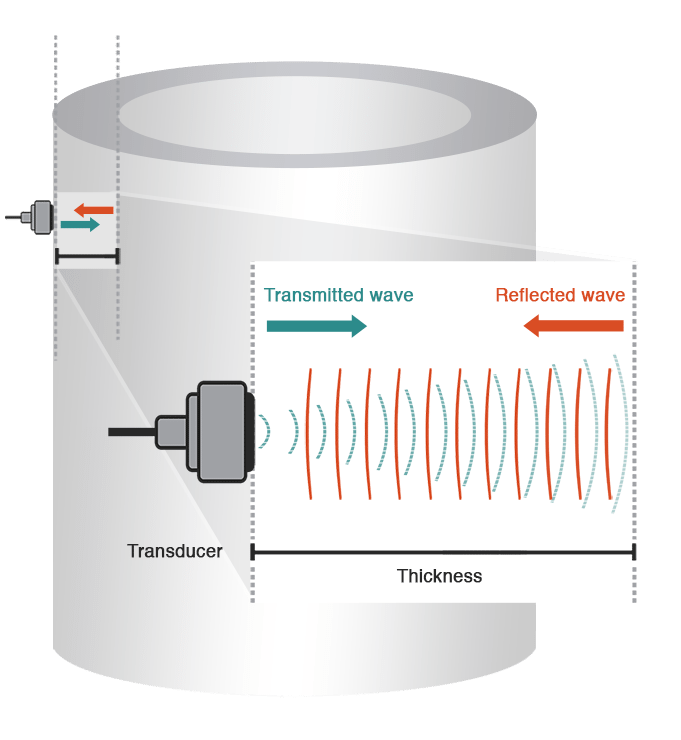
Thickness measurement is a similar application of ultrasonics, but in this case, we WANT to see the reflections. We are looking for the reflection that represents the backside of the test piece. By measuring the time it takes a sound wave to travel through a pipe wall and reflect off the inside surface of the pipe and then back to the outer surface, the thickness of the pipe can be calculated. What makes this such a valuable feat is that Sensor Networks can measure thicknesses without the need to access both sides of the test piece.
The app has to be functional despite factors ranging from poor lighting to bulky gloves to beating sleet or blazing sun.
solution
Solution
A Hardware-Integrated Software Platform
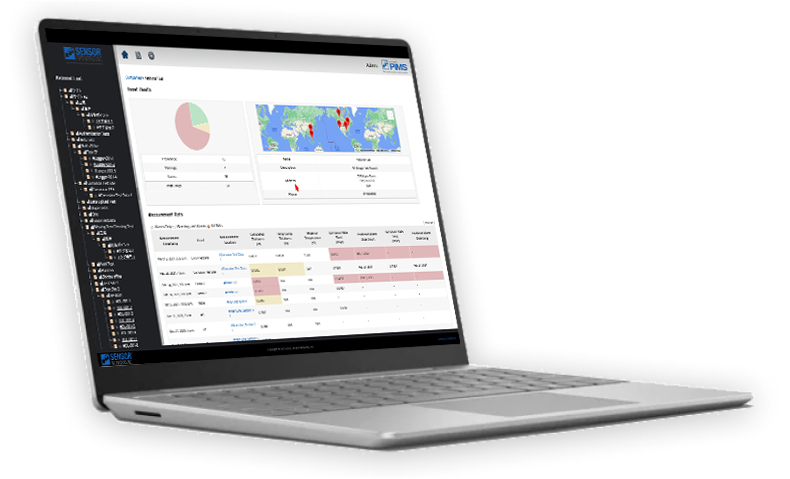
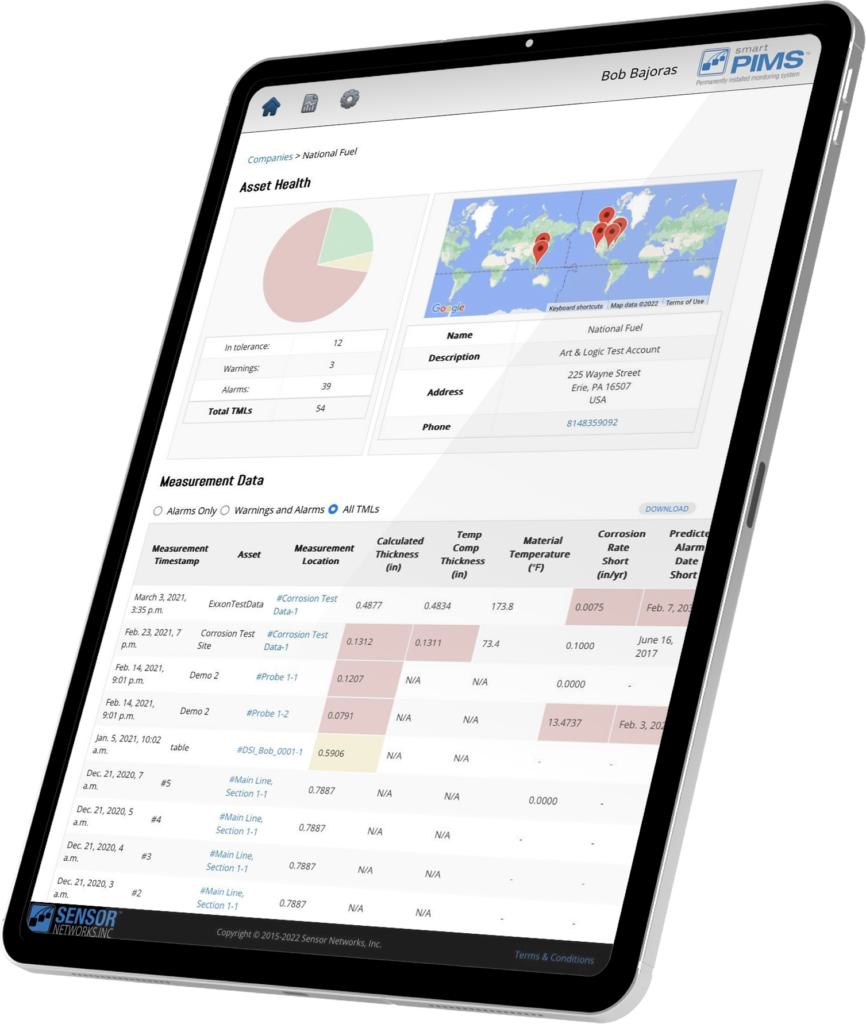
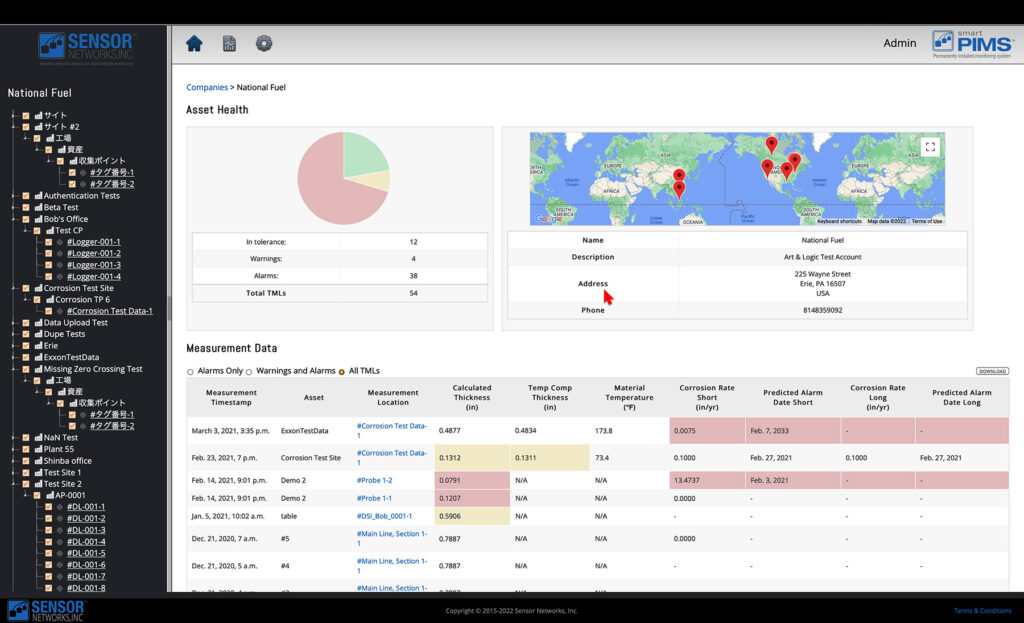
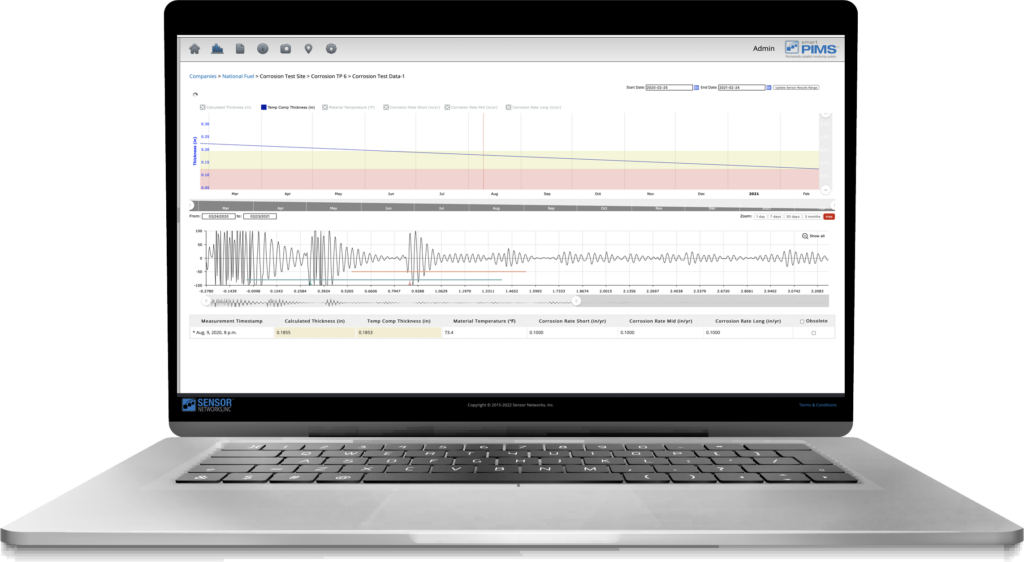
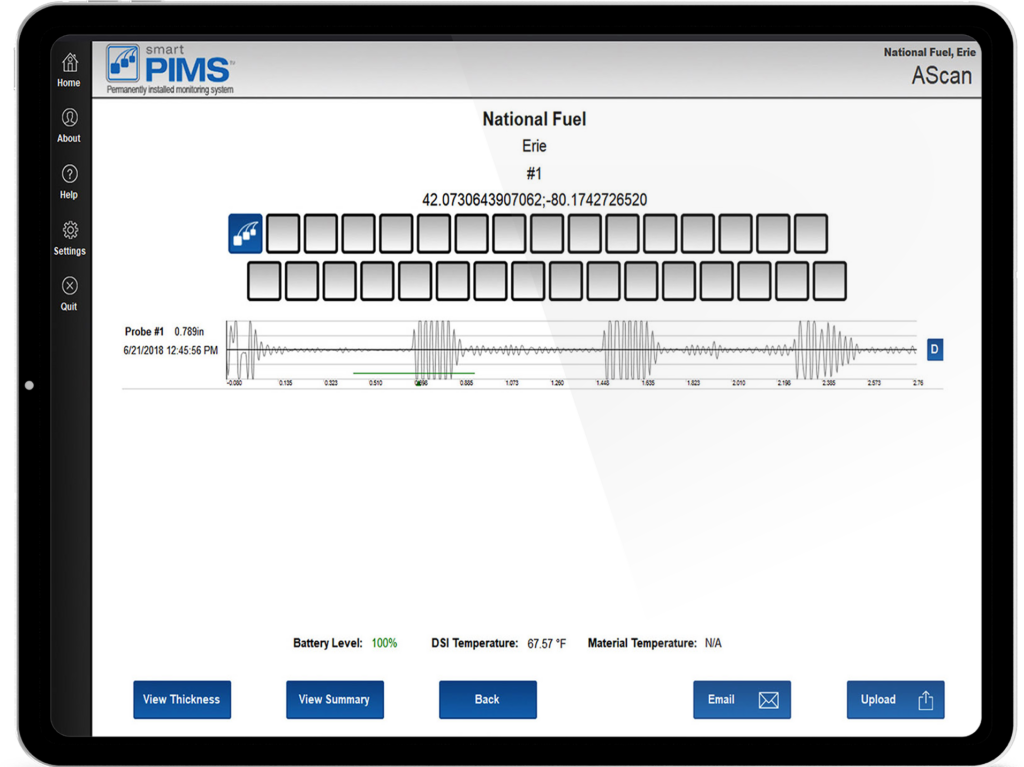
While still a startup, SNI hired Art+Logic to build a Windows-based tablet application (dataPIMS®) used to configure sensors and retrieve field measurements. In parallel, we developed webPIMS®, a cloud-based reporting and analytics platform.
To enable parallel hardware and software development, we built a high-fidelity device simulator that generated realistic ultrasonic waveforms. This allowed full end-to-end testing long before final hardware was available—reducing risk and accelerating delivery.
Technical Architecture
-
Tablet App: Windows-based, designed for harsh field environments
-
Web Platform: Django / Python with PostgreSQL on AWS
-
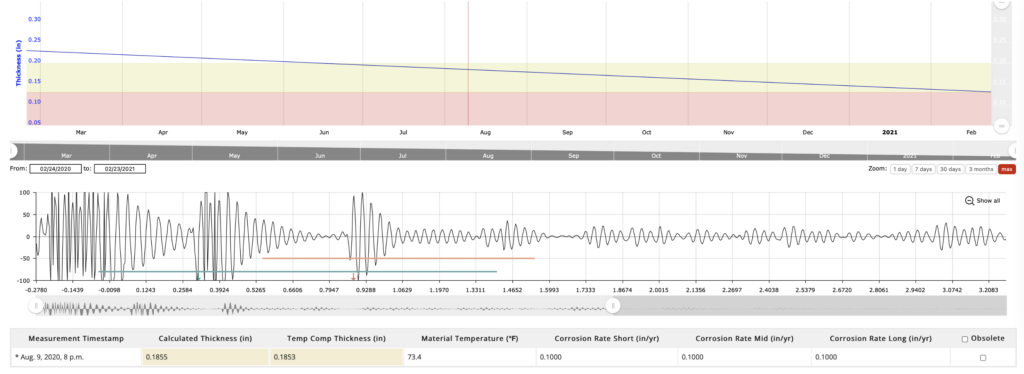
Data Visualization: Interactive trend charts and waveform plots using JavaScript libraries
-
Deployment Models: Cloud-hosted or secure “inside-the-fence” installations
goals +
objectives
Goals + Ojectives
Zero-Knowledge Configuration
Any tablet could connect to any provisioned sensor interface. All configuration data lived inside the hardware, enabling flexible, interchangeable field operations.
Open, Documented Data Formats
We designed an open data exchange format so customers could easily integrate NanoSense data into their own analytics pipelines—future-proofing the platform as new hardware and connectivity models emerged.
Designed for Real-World Conditions
- The tablet app was optimized for:
Mixed skill levels in the field - Visually guided workflows
- Operation in extreme weather and lighting, whether inside an oil or chemical plant or along miles of exposed pipelines, even with bulky gloves, beating sleet, or blazing sun
- Offline data collection with delayed uploads, necessary for isolated or remote locations.
Early feedback directly informed usability and feature priorities—requiring a platform flexible enough to pivot without rewrites.
challenges
Challenges
Special considerations when developing for startups
Hardware-First Development
Although hardware wasn’t finalized at project start, our simulator approach ensured smooth integration once devices shipped.
Security & Compliance
Oil & Gas environments demand strict data security. We worked closely with customer IT teams to harden AWS deployments or implement fully local installations when required.
Adapting to Market Reality
Early customer feedback challenged initial assumptions. The ability to pivot quickly—without destabilizing the platform—was critical to successful launch.
business
considerations
Business considerations
Art+Logic brought prior domain expertise in non-destructive testing, enabling us to collaborate as more than a vendor. We worked as an extension of SNI’s engineering team—helping shape product direction as customer needs evolved.
As SNI grew, so did the platform.
Our long-term partnership allowed us to:
-
Expand feature sets without architectural debt
-
Support new hardware generations
-
Adapt to global deployment requirements
As customers define new functionality to enhance their use of the product, we will continue to work with SNI in making the system increasingly powerful and useful.
results
Results
-
100+ customers worldwide across Europe, Asia, and the Americas
-
Thousands of permanently installed sensors deployed in live facilities
-
New instrument versions supporting automated uploads via mesh and cellular networks
-
A scalable platform supporting ongoing innovation and expansion
NanoSense has become a mission-critical system for customers monitoring high-risk infrastructure—turning complex sensor data into actionable insight.
New Website and Branding
contact us
Generally, we are able to respond to inquiries within one business day. We look forward to showing you why we're a unique kind of software development firm.
If you are interested in working for Art+Logic, please visit our careers page.